
North Carolina Gardeners Warned: Warm Soil Temperatures Across Charlotte, Hickory, and Southern Pines Could Trigger Early Plant Growth Before April Frost Risk Ends
CHARLOTTE, NORTH CAROLINA — Recent stretches of mild weather across the Charlotte metro area and the North Carolina Piedmont have caused yards and landscapes to begin greening up earlier than usual. But meteorologists are warning residents not to let the warm conditions fool them — the risk of frost and freezing temperatures is still very much present across the region.
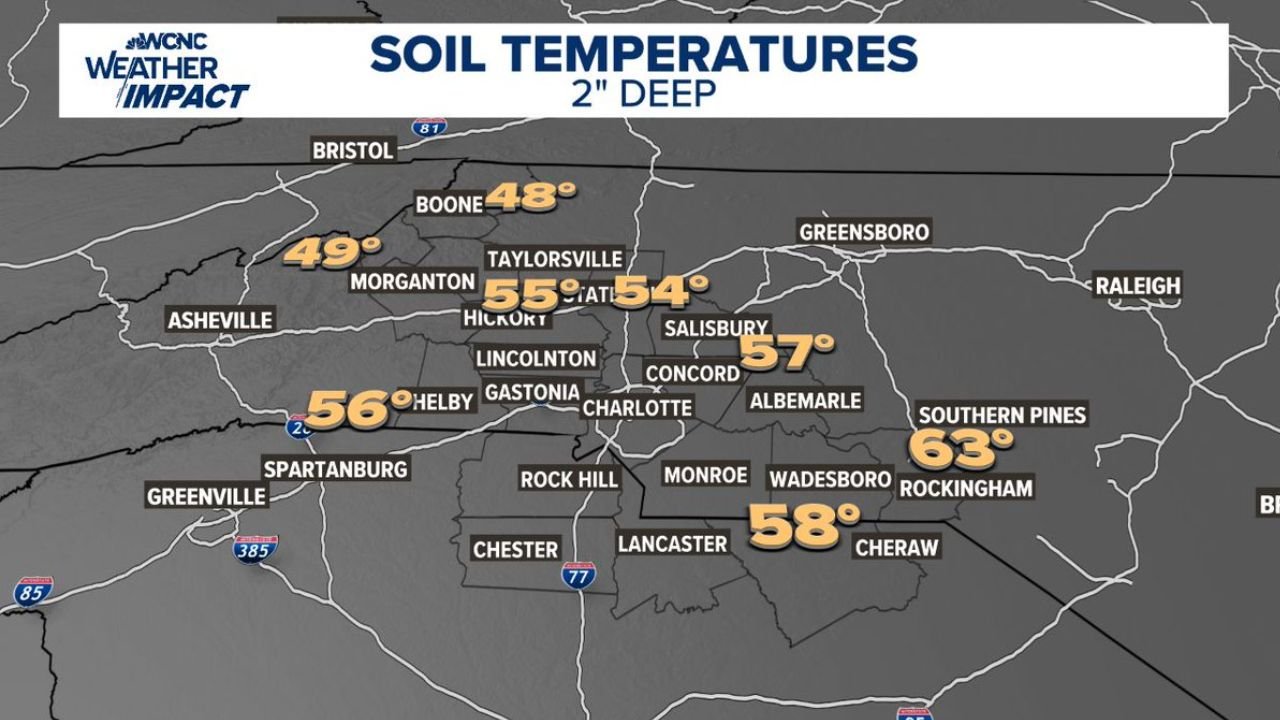
Weather data shows soil temperatures measured two inches below the surface have already climbed into the mid-50s across much of the Charlotte region, with some locations approaching or even surpassing 60 degrees in the Sandhills. These warm soil readings are enough to trigger dormant plants, grasses, and weeds to start growing again, which explains why many neighborhoods are seeing early blooms and greenery.
However, forecasters emphasize that this early growth could be deceptive, because historical frost dates show winter conditions can still return weeks from now.
Soil Temperatures Rising Across the Charlotte and Piedmont Region
Current soil temperature readings across the western and central parts of North Carolina show significant warming compared to typical late-winter conditions. Several cities across the region are already reporting soil temperatures well into the growth range for plants.
Some of the most notable readings include:
- Boone: 48°F
- Morganton: 49°F
- Hickory: 55°F
- Statesville: 54°F
- Salisbury: 57°F
- Shelby: 56°F
- Wadesboro: 58°F
- Southern Pines: 63°F
Even in the High Country near Boone, soil temperatures are pushing close to 50 degrees, while the Charlotte metro and Piedmont areas are already sitting in the mid-50s. When soil temperatures consistently remain in the 50-degree range, plants interpret it as the beginning of the growing season.
This is why lawns are greening up and trees are beginning to bud, even though the calendar still places the region in late winter.
Early Growth May Be Misleading as “False Spring” Develops
Meteorologists say the current pattern resembles what many weather experts call an “Early Fools Spring” or “False Spring.”
This happens when warm temperatures arrive early enough to wake up plant life, but the broader atmospheric pattern still allows cold air outbreaks to return later in the season.
While the ground may be warming, the atmosphere above it still has the potential to deliver late-season cold snaps, which can damage plants that begin growing too soon.
For gardeners and farmers, this period can be especially tricky because planting too early may expose sensitive crops to unexpected frost damage.
Historical Frost Dates Show Winter Isn’t Over Yet
Historical climate data for the Charlotte region highlights why forecasters are urging patience before beginning spring planting.
The average dates for the last freeze and frost are still several weeks away:
Last Freeze (32°F):
- Average: March 28
- Earliest recorded: February 18, 1997
- Latest recorded: May 2, 1963
Last Frost (36°F):
- Average: April 10
- Earliest recorded: March 11, 1946
- Latest recorded: May 18, 1973
These records show that while spring warmth may arrive early in some years, frost events can still occur well into April — and occasionally even into May.
That means planting sensitive vegetables, flowers, or fruit crops too early could lead to losses if temperatures drop again.
Gardeners Urged to Wait Before Planting Spring Crops
Experts recommend enjoying the early warmth but holding off on planting delicate spring and summer crops until the risk of frost has passed.
Gardeners across Charlotte, Salisbury, Hickory, Shelby, Southern Pines, and surrounding communities should consider waiting until closer to mid-April before planting crops such as:
- Tomatoes
- Peppers
- Squash
- Cucumbers
- Beans
- Many flowering plants
Until then, keeping frost blankets or protective covers available can help shield early blooms if colder nights return.
Early Warmth Doesn’t Guarantee an Early Spring
Even though temperatures have been pleasant across much of North Carolina, meteorologists stress that the region still has plenty of time for winter-like conditions to return.
The combination of warming soils and lingering atmospheric cold potential means residents should treat the current greenery as a preview of spring — not the official start of it.
Stay Updated With WaldronNews
Weather patterns during the transition from winter to spring can shift quickly. WaldronNews will continue monitoring temperature trends, frost risks, and seasonal weather changes across the Southeast and the Carolinas.
Stay connected with WaldronNews.com for the latest updates, weather insights, and seasonal forecasts that could impact your home, garden, and daily life.