
Maryland, Virginia and Pennsylvania Face Rare 30% Severe Storm Risk as Powerful System Targets the Mid-Atlantic
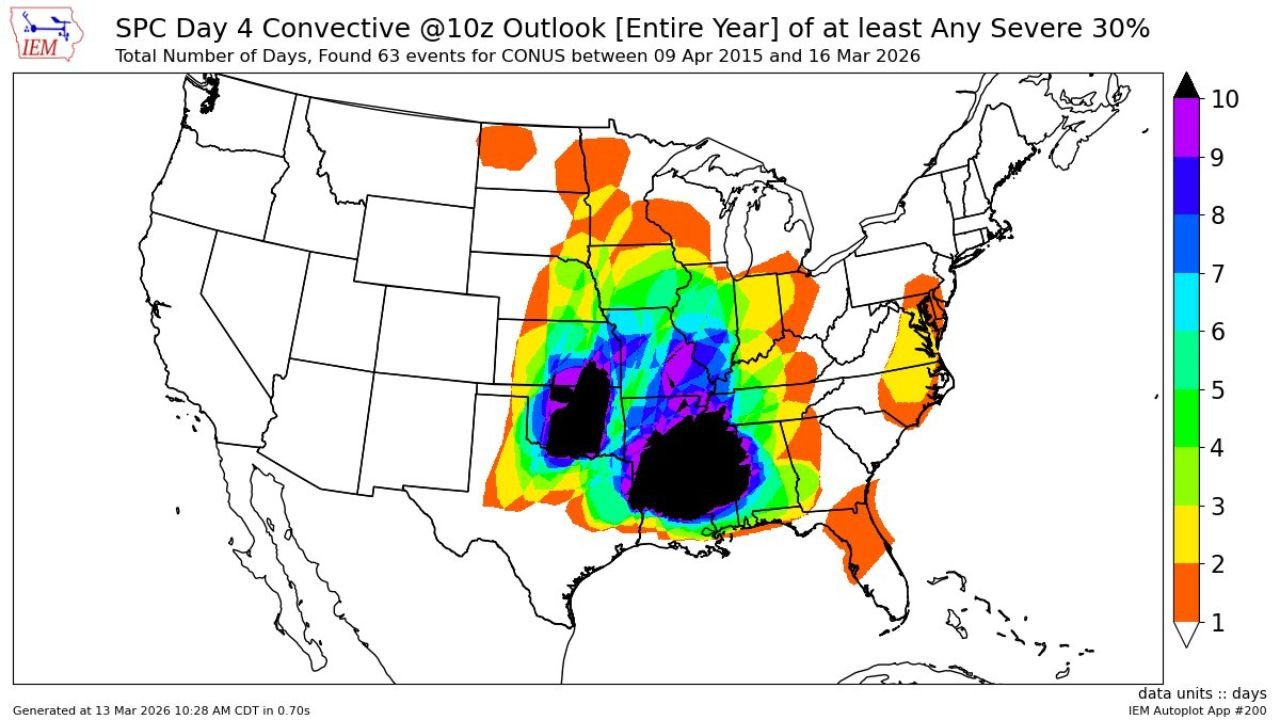
UNITED STATES — Meteorologists are closely watching an increasingly concerning storm setup developing for the Mid-Atlantic region, where a rare 30% Day-4 severe weather risk has been issued, highlighting the potential for a significant storm event across Maryland, Virginia, Pennsylvania, and nearby states.
Forecast data suggests that conditions could become favorable for severe thunderstorms capable of producing damaging winds, large hail, and possible tornadoes as the system approaches the eastern United States early next week.
Weather experts say a 30% risk issued four days in advance is relatively uncommon, underscoring the potential seriousness of the developing weather pattern.
Rare Forecast Signal for the Mid-Atlantic
The Storm Prediction Center occasionally issues early outlooks when forecast confidence begins increasing for severe weather several days in advance.
However, a 30% probability zone in a Day-4 outlook is considered a notable signal because it indicates that meteorologists are seeing strong indicators for an organized severe weather event.
Historical data shows that only a limited number of such outlooks have been issued across the United States since 2015, making this type of forecast relatively rare.
In this case, the highlighted area includes parts of:
- Maryland
- Virginia
- Pennsylvania
- Portions of New Jersey
- Parts of Delaware
- Surrounding Mid-Atlantic regions
Cities such as Washington D.C., Baltimore, Richmond, and Philadelphia may fall within the area being monitored for potential severe storms.
Powerful Storm System Expected to Move East
The developing severe weather threat is tied to a large and dynamic storm system expected to move from the central United States toward the eastern states.
As the system progresses eastward, it is expected to interact with warm and humid air moving north from the Atlantic and Gulf regions, creating conditions that can support strong thunderstorms.
At the same time, strong winds in the upper atmosphere may provide the wind shear necessary for storms to organize and intensify.
This combination of ingredients often leads to severe weather outbreaks across the eastern United States during the spring season.
Severe Storm Potential Still Several Days Away
Despite the elevated risk signal, meteorologists emphasize that the forecast remains several days away, meaning details about the exact impacts will continue to evolve.
Forecasters are waiting for additional model data — including new runs of weather models — before refining the exact location and intensity of the severe weather threat.
Small shifts in the storm track could significantly change which states experience the highest impacts.
Damaging Winds and Tornadoes Could Become Primary Threats
If the storm develops as currently projected, the main hazards could include:
- Widespread damaging wind gusts
- Large hail
- Isolated tornadoes
Fast-moving lines of storms or individual supercells could develop depending on how atmospheric conditions evolve as the system approaches the Mid-Atlantic.
The timing of the storms may also play a role, as severe weather during evening or overnight hours can increase potential impacts.
Residents Urged to Monitor Forecast Updates
Because the event is still several days away, meteorologists stress that the situation should be viewed as an early heads-up rather than a final forecast.
However, the unusual nature of the early outlook suggests that weather experts are paying close attention to the developing pattern.
Residents across the Mid-Atlantic region, including Maryland, Virginia, and Pennsylvania, are encouraged to monitor forecast updates throughout the coming days.
As new data becomes available, forecasters will be able to better determine the exact track and severity of the storm system.
Stay with WaldronNews for continuing updates as meteorologists track the developing severe weather threat targeting Maryland, Virginia, Pennsylvania, and the broader Mid-Atlantic region.