
California, Arizona, and Southwest U.S. Face Historic March Heatwave as Temperatures Surge Into 100s in Rare Top 1% Event
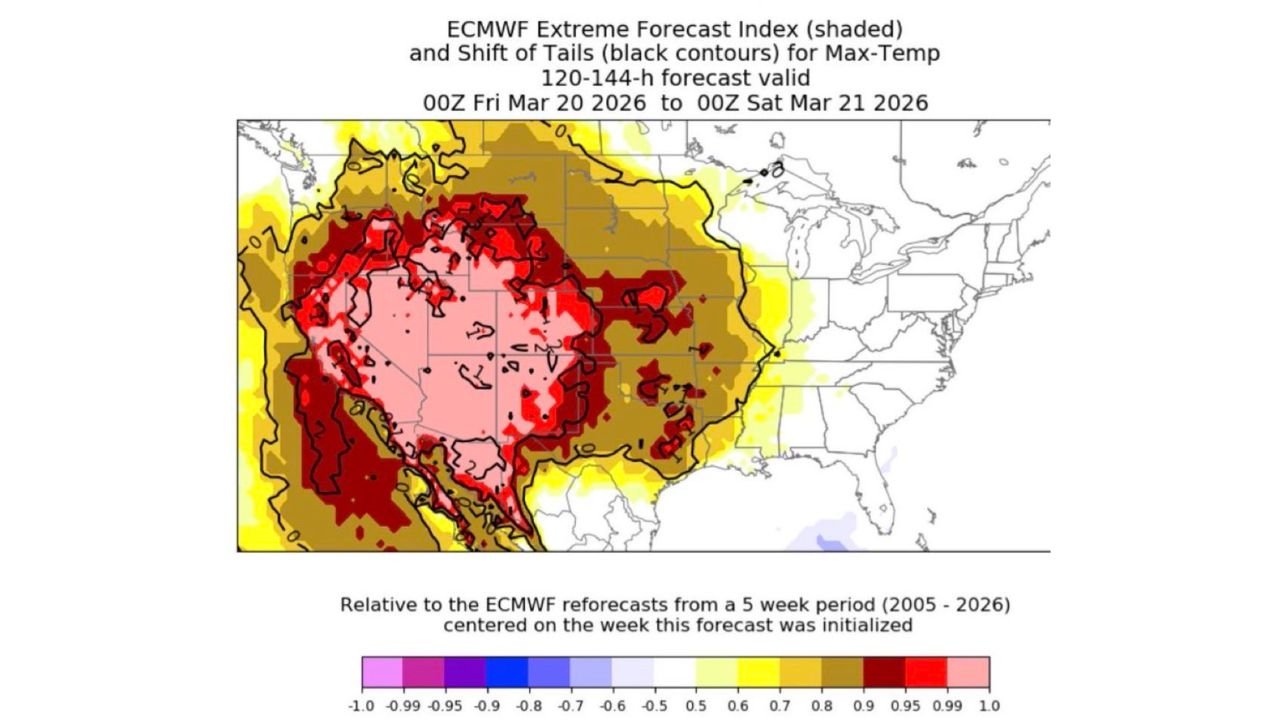
CALIFORNIA — A potentially historic heatwave is rapidly building across the Southwest United States, with forecast data signaling an extreme and highly unusual temperature event that ranks among the most intense ever recorded for the month of March.
Meteorologists say this is not just above-average warmth — it is a top 1% anomaly, meaning conditions fall within the most extreme range compared to decades of historical data.
Extreme Heat Signal Covers Much of the Southwest
Forecast models show a massive zone of extreme heat stretching across:
- California, including Los Angeles and coastal regions
- Arizona and Nevada
- Parts of New Mexico and Utah
The most intense core of this heat is centered over the Desert Southwest, where temperatures are expected to deviate dramatically from normal March conditions.
What the Data Shows
The Extreme Forecast Index (EFI), a tool used to identify unusual weather events, is highlighting widespread red and pink shading across the region.
This indicates:
- Temperatures in the top 99th percentile compared to historical averages
- A high-confidence signal for rare and extreme heat
- A multi-day event rather than a brief spike
For context, typical high temperatures for this time of year in many of these areas range between 68°F and 74°F.
Temperatures Expected to Reach Summer-Like Levels
Forecast highs across the Southwest are expected to climb into:
- 95°F to 104°F across many inland areas
- Even higher readings possible in desert locations
These values are more typical of mid-summer, not mid-March.
In fact, meteorologists note that while these temperatures would be considered normal in July or August, they are extremely rare this early in the year.
A Multi-Decade Level Event
What makes this heatwave particularly notable is its rarity.
- The magnitude and duration classify it as a multi-decade event for March
- The EFI signal suggests this level of heat has very few historical comparisons
- Coastal areas, which typically remain cooler, are also expected to experience unusual warmth
This broad geographic impact further increases the significance of the event.
Why This Heatwave Is Developing
Several atmospheric factors are contributing to this extreme setup:
- A strong high-pressure ridge dominating the western U.S.
- Sinking air that compresses and heats as it descends
- Clear skies allowing maximum solar heating
- Dry desert air enhancing temperature spikes
Together, these elements are creating a powerful and persistent heat dome.
Timing of the Event
The heatwave is expected to:
- Begin intensifying by late week
- Peak between Friday, March 20 and Saturday, March 21
- Persist for multiple days before gradual cooling
This extended duration increases the likelihood of record-breaking temperatures.
Why This Matters
Early-season heat events like this can have significant impacts:
- Increased health risks due to lack of acclimatization
- Stress on power systems from early cooling demand
- Elevated wildfire risk due to dry conditions
- Impacts on agriculture and ecosystems
The unusual timing makes the event even more dangerous, as many people are not yet prepared for extreme heat.
Bottom Line
A rare and potentially historic March heatwave is set to impact California, Arizona, and much of the Southwest:
- Temperatures soaring into the upper 90s and 100s
- Conditions ranking in the top 1% of historical extremes
- A multi-day event with widespread impacts
This is not just early heat — it is a record-threatening, high-impact weather event that could redefine what March typically looks like in the Southwest.
Stay with WaldronNews.com for continued updates as this extraordinary heatwave develops across the western United States.