
Las Vegas Nevada Hits 96°F, Death Valley California Soars to 101°F as Records Fall Across Arizona and Southern California
LAS VEGAS, NEVADA — A powerful late-March heatwave shattered daily temperature records across parts of Nevada, California and Arizona on March 23, 2026, with desert communities experiencing readings more typical of early summer than early spring.
According to data released by the National Weather Service in Las Vegas, multiple cities either broke longstanding records or pushed temperatures into triple digits.
Triple-Digit Heat in Death Valley and Needles
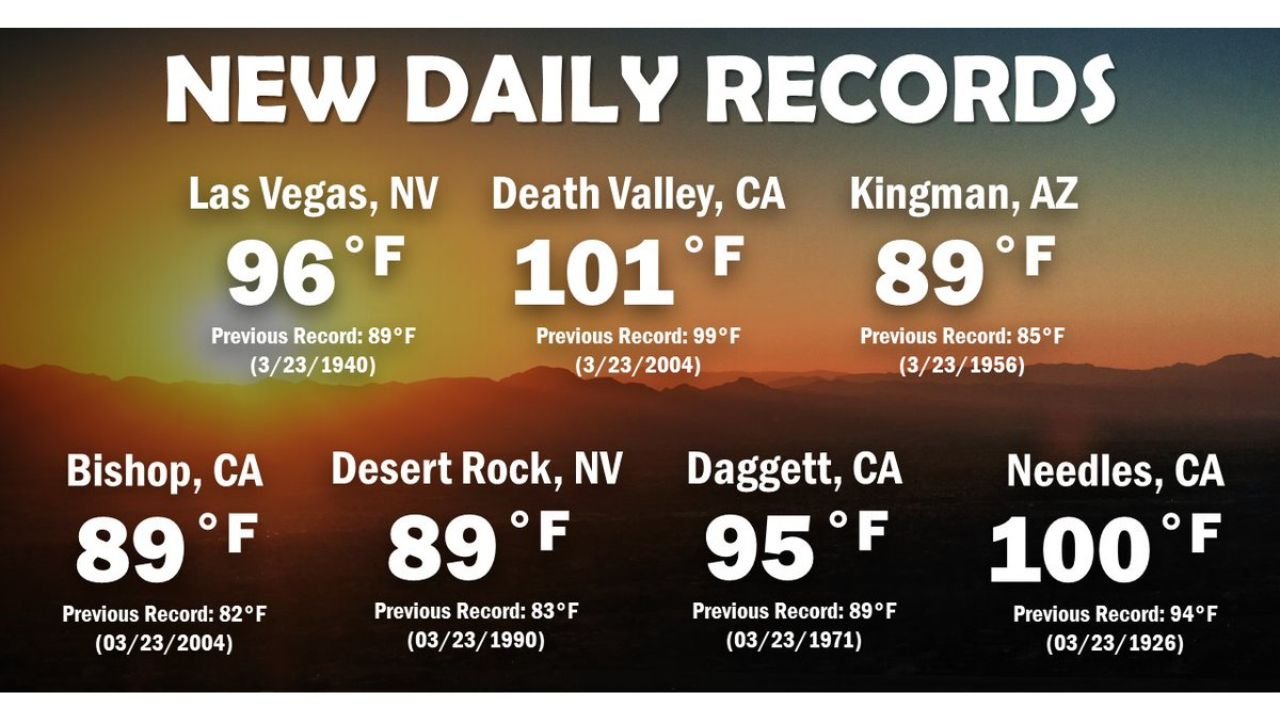
The most extreme reading came from Death Valley, California, where the temperature climbed to 101°F, breaking the previous March 23 record of 99°F set in 2004.
Not far behind, Needles, California reached 100°F, surpassing its prior record of 94°F set in 1926 — a mark that had stood for nearly a century.
These triple-digit readings in March underscore the intensity of the heat gripping the Mojave Desert.
Las Vegas Breaks 86-Year-Old Record
In Las Vegas, Nevada, the high temperature reached 96°F, breaking the previous record of 89°F set in 1940.
The seven-degree jump over the old record highlights how significantly temperatures overshot historical norms for the date.
Nearby Desert Rock, Nevada also set a new record at 89°F, topping the previous mark of 83°F set in 1990.
Records Fall in Arizona and Eastern California
The heat extended beyond southern Nevada:
- Kingman, Arizona: 89°F, breaking the previous record of 85°F (1956)
- Bishop, California: 89°F, breaking the previous record of 82°F (2004)
- Daggett, California: 95°F, breaking the previous record of 89°F (1971)
Each of these locations exceeded prior records by several degrees, signaling a widespread and consistent heat event rather than isolated anomalies.
A Regional Pattern of Extreme Warmth
The March 23 surge marks another day of record-breaking temperatures across the Southwest. With Nevada, California and Arizona all reporting new highs, the data reflects a large-scale warm air mass dominating the region.
Temperatures in the mid-90s to low 100s are far above typical late-March averages for these desert communities, where average highs usually remain considerably lower this time of year.
What Comes Next
While officials note that all data remains preliminary pending final verification, the scale and number of broken records indicate that this heat event is significant for the region.
If the pattern persists, additional daily records could fall in the days ahead.
For continued updates on extreme weather across Nevada, California, Arizona and beyond, stay with WaldronNews.com.