
Florida Rainy Season Arrives in One Month Bringing 2 to 3 Feet of Rain Statewide as Miami Leads With 38 Inches and North Port Tops the Peninsula at 33 Inches
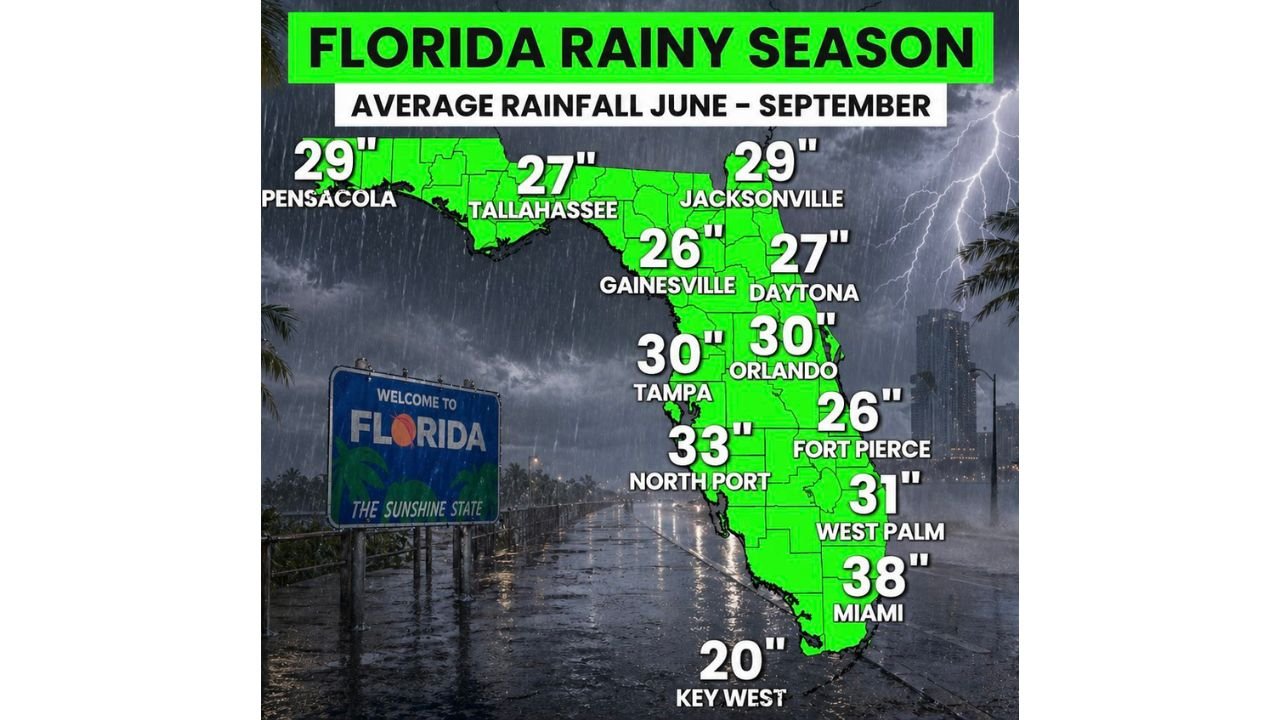
MIAMI, Florida — Florida’s rainy season is one month away, and after a dry stretch across much of the state, the timing could not be more welcome. From June through September, two-thirds of Florida’s entire yearly rainfall falls in just four months, delivering 2 to 3 feet of rain across the state through a combination of heat-driven afternoon storms, extra humidity, sea breeze collisions from the Gulf and Atlantic, and occasionally tropical systems pushing moisture inland. The numbers by city reveal a dramatic range — from 38 inches in Miami down to 20 inches in Key West — driven by geography, sea breeze dynamics and proximity to warm open water.
What Drives Florida’s Rainy Season
The mechanism behind Florida’s rainy season is unlike any other weather pattern in the continental United States. Four forces combine to make the June through September period the state’s most active rainfall window:
- Heat — summer surface temperatures across the Florida peninsula regularly exceed 90°F, driving intense afternoon convection as heated surface air rises rapidly into the atmosphere
- Extra humidity — moisture levels across Florida during summer are among the highest in the country, with dewpoints frequently in the mid-to-upper 70s°F, providing abundant fuel for thunderstorm development
- Sea breeze collisions — cool, moist air flowing inland from both the Gulf of Mexico to the west and the Atlantic Ocean to the east meets over the Florida peninsula, creating a collision zone where storms fire with remarkable regularity every afternoon
- Tropical systems — hurricanes, tropical storms and tropical waves that track through the Caribbean and Gulf during the June through November hurricane season can deliver additional extreme rainfall on top of the seasonal average
Average Rainfall by City — June Through September
The geographic variation across Florida is substantial, driven by the shape of the peninsula and the competing influences of Gulf and Atlantic sea breezes:
- Miami, Florida — 38 inches — highest total in the state, reflecting Miami’s position where Atlantic and Gulf moisture converge most efficiently
- North Port, Florida — 33 inches — the top total on the Gulf Coast side of the peninsula, where sea breeze interactions are intense
- West Palm Beach, Florida — 31 inches — southeastern Atlantic Coast sees consistent tropical moisture through the season
- Tampa, Florida — 30 inches — Gulf Coast sea breeze drives reliable afternoon storm development
- Orlando, Florida — 30 inches — central Florida’s interior position puts it directly in the sea breeze collision zone most afternoons
- Pensacola, Florida — 29 inches — western Panhandle benefits from Gulf moisture but with less sea breeze interaction than the peninsula
- Jacksonville, Florida — 29 inches — northern Atlantic Coast sees strong summer rainfall from sea breeze and occasional tropical influence
- Daytona Beach, Florida — 27 inches — Atlantic Coast city with consistent summer storm activity
- Tallahassee, Florida — 27 inches — North Florida capital sees robust summer convection
- Gainesville, Florida — 26 inches — north-central interior with moderate sea breeze influence
- Fort Pierce, Florida — 26 inches — Treasure Coast sees active summer storms
- Key West, Florida — 20 inches — lowest total on the map, as the narrow geography of the Keys limits the sea breeze collision mechanism that drives such high totals across the main peninsula
Why the Two-Thirds Rule Matters
The fact that two-thirds of Florida’s annual rainfall arrives in just four months has significant implications beyond simple weather awareness:
- Water supply — Florida’s aquifer systems, lakes and reservoirs depend heavily on rainy season recharge. A below-normal rainy season creates drought and water shortage conditions that can persist well into the following year
- Wildfire risk — the dry season preceding the rainy season, particularly March through May, is Florida’s peak wildfire period. The rainy season arrival effectively ends that threat by saturating vegetation statewide
- Agriculture — Florida’s farming regions across the Treasure Coast, Lake Okeechobee basin and the Panhandle depend on rainy season totals to support citrus, sugarcane and vegetable crops through the growing cycle
- Flooding — when tropical systems combine with an already-active sea breeze pattern, rainfall rates can exceed 4 to 6 inches in a single afternoon, overwhelming drainage infrastructure across low-lying coastal communities
What to Expect When the Season Opens in June
The rainy season does not flip on like a switch but rather ramps up through late May and early June as the Bermuda High — a large high-pressure system over the Atlantic — strengthens and pushes more moisture into the Florida peninsula. Once established, the pattern becomes remarkably consistent:
- Morning sunshine across most of the state
- Sea breezes developing from both coasts by mid-morning
- Afternoon thunderstorms firing inland by 1 to 3 PM, often with lightning, heavy rain and gusty winds
- Storms moving offshore or dissipating by evening as heating decreases
- The cycle repeats nearly every day for four months
Florida residents and visitors should plan outdoor activities for the morning hours and have a lightning safety plan in place for afternoons from June through September. With 30 inches or more falling across Tampa, Orlando, Miami and West Palm Beach during this window, the rainy season is not a brief inconvenience — it is the defining weather reality of Florida summer.
WaldronNews.com will continue tracking Florida’s seasonal weather patterns and provide updates on rainy season onset timing and any tropical systems that may enhance rainfall totals through the summer months.
The feature image used in this article was created with the assistance of artificial intelligence.