
Florida Faces Historic Drought Crisis as Entire State Falls Into Drought Conditions With 67% Now in Extreme Drought
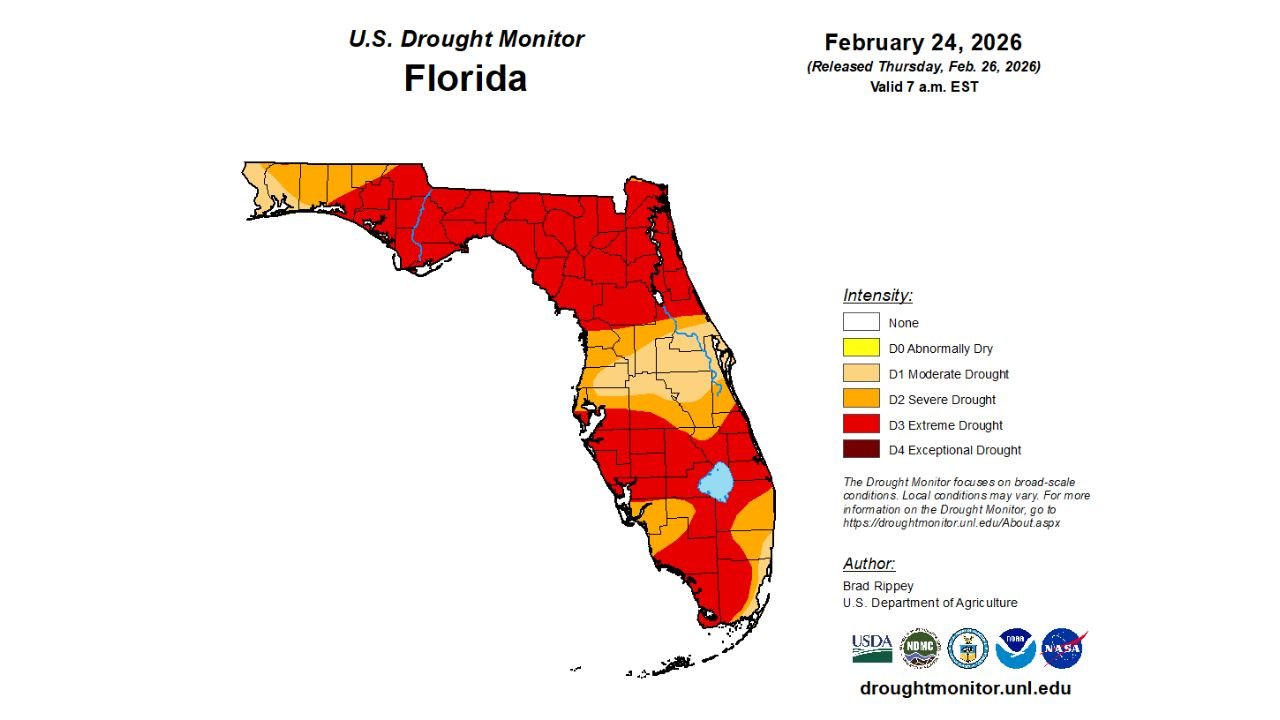
FLORIDA — New data from the U.S. Drought Monitor released February 24, 2026, shows an alarming milestone across the Sunshine State: every part of Florida is now experiencing drought conditions, marking the first time in the 21st century that 100% of the state has fallen into drought status.
Even more concerning, the report indicates a record-breaking 67% of Florida is currently classified under “Extreme Drought” (D3), signaling severe water shortages and significant stress on ecosystems, agriculture, and water supplies across the state.
Extreme Drought Now Dominates Most of Florida
The latest drought map shows large sections of northern, central, and southern Florida covered in deep red, representing extreme drought conditions.
Areas experiencing widespread extreme drought include:
- Jacksonville and much of Northeast Florida
- Tallahassee and the Florida Panhandle
- Gainesville and North Central Florida
- Tampa Bay region
- Southwest Florida including Fort Myers and Naples
- Large portions of South Florida
These conditions indicate major rainfall deficits and rapidly drying soils, which can significantly increase wildfire risk and strain water resources.
Moderate to Severe Drought Also Spreading Across Central Florida
While extreme drought dominates much of the map, other parts of the state are experiencing moderate to severe drought conditions, particularly across sections of central Florida and interior regions.
Counties across the Orlando corridor and parts of inland central Florida appear in lighter drought categories, including:
- Moderate Drought (D1)
- Severe Drought (D2)
These areas are still experiencing notable rainfall shortages, though conditions are slightly less severe compared to the widespread extreme drought surrounding them.
Why This Drought Is Historically Significant
Florida regularly experiences dry seasons during winter and early spring, but the current situation stands out due to its statewide scale and severity.
According to drought monitoring data:
- 100% of Florida is now in drought
- 67% of the state is classified as extreme drought
- This marks the highest level of extreme drought coverage ever recorded in Florida
Such widespread drought can lead to falling water levels in lakes and rivers, agricultural losses, increased wildfire risk, and stress on municipal water supplies.
Potential Impacts Across the State
If dry conditions persist, Florida could face several growing concerns over the coming weeks.
Possible impacts include:
- Increased wildfire danger, especially across forests and grasslands
- Water restrictions in some communities
- Agricultural stress on crops and livestock
- Lower lake and groundwater levels
- Environmental impacts on wetlands and wildlife
Spring rainfall will play a key role in determining whether conditions improve or worsen across the state.
What Happens Next
Meteorologists will be closely monitoring upcoming weather patterns to see whether rainfall systems develop that could help relieve the drought.
However, drought recovery typically requires multiple significant rain events over several weeks, meaning conditions could persist for some time if rainfall remains limited.
For now, the new drought data highlights a historic and concerning moment for Florida’s climate conditions, with the entire state now officially experiencing drought.
Stay with WaldronNews.com for continuing coverage on drought conditions, weather developments, and climate updates affecting communities across the United States.