
March 5–7 Outbreak Drives Early 2026 Tornado Map: EF-3 Damage Reported in Oklahoma and Michigan as Southern States See Widespread EF-1 Activity
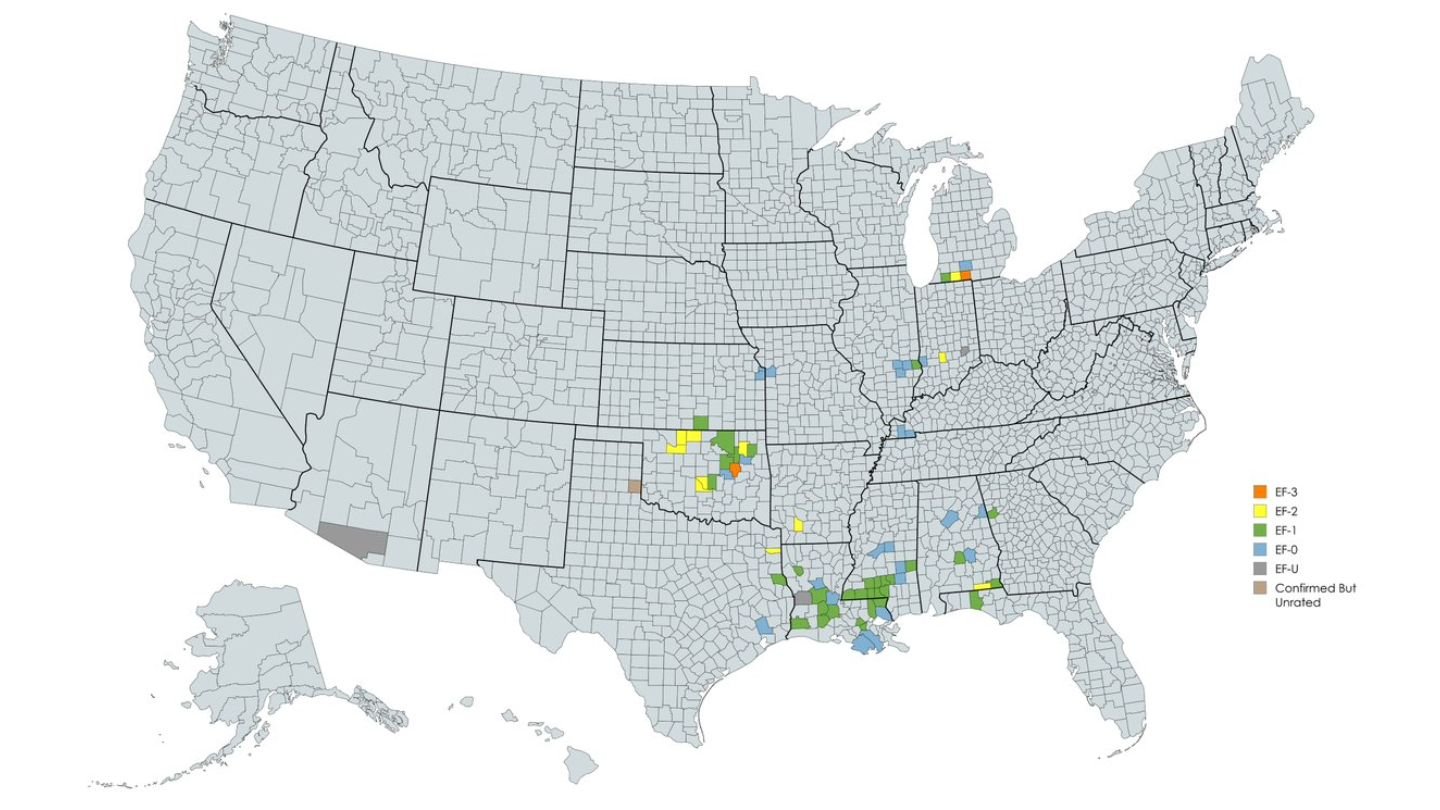
UNITED STATES — Just over two months into 2026, tornado activity has already left its mark across multiple regions of the country, with the strongest confirmed damage so far reaching EF-3 intensity in parts of Oklahoma and Michigan. New survey data, reflecting storms through March 9, shows clusters of tornado reports concentrated across the Southern Plains, Lower Mississippi Valley, and parts of the Midwest following the March 5–7 outbreak.
Surveys from that multi-day severe weather event are still ongoing, meaning the map may continue to evolve as National Weather Service offices finalize ratings.
Where the Strongest Tornadoes Have Occurred
As of March 9, the highest-rated tornadoes of 2026 (so far) include:
- EF-3 damage in portions of Oklahoma
- EF-3 damage in parts of southern Michigan
In Oklahoma, multiple counties show stronger ratings clustered across central sections of the state. The Michigan rating appears more localized but stands out given the early-season timing in the Great Lakes region.
EF-3 tornadoes are capable of causing severe structural damage, including heavily damaged homes and significant tree loss.
Southern States See Numerous EF-1 and EF-2 Reports
The highest concentration of tornado activity so far this year is centered across:
- Louisiana
- Mississippi
- Alabama
- Arkansas
- Eastern Texas
Much of this region shows EF-0 to EF-2 ratings, with several counties reporting EF-1 damage. The clustering suggests repeated rounds of strong to severe thunderstorms over the Lower Mississippi Valley during early March.
While many of these tornadoes were on the weaker end of the Enhanced Fujita scale, EF-1 and EF-2 events can still produce considerable roof damage, snapped trees, and power outages.
Central Plains and Midwest Activity
Beyond Oklahoma, additional tornado reports have been confirmed in:
- Kansas
- Missouri
- Illinois
- Indiana
Several Illinois and Indiana counties reflect lower-end EF ratings, while Kansas and Missouri include a mix of EF-0 to EF-2 reports.
The Midwest has also seen scattered activity, including the EF-3 report in Michigan — a notable development given the early-season timeframe.
Confirmed but Unrated Reports
A few counties remain marked as “confirmed but unrated,” indicating that tornadoes have been verified but final damage surveys have not yet assigned a rating. With surveys from the March 5–7 outbreak still ongoing, adjustments to both intensity and county totals remain possible.
Geographic Pattern So Far
The early 2026 tornado footprint reflects a fairly typical late-winter to early-spring distribution:
- Concentration across the Southern Plains
- Heavy clustering in the Deep South
- Expanding activity into the Midwest
The Southeast and Gulf Coast states currently show the greatest density of counties affected, though stronger peak intensity has occurred farther north and west.
What This Means Moving Forward
While it is still early in the year, the presence of EF-3 damage in multiple states underscores how quickly the severe weather season can escalate.
Historically, tornado activity increases through March and April as warmer air masses surge northward and stronger jet stream dynamics become more frequent.
With survey work still ongoing from the March 5–7 outbreak, the final count and intensity breakdown for early 2026 may continue to shift in the coming days.
WaldronNews.com will continue monitoring updates as additional ratings are finalized and as the 2026 severe weather season unfolds nationwide.