
Flagstaff, Arizona Facing Potentially Historic March Heat, Forecast 87°F Would Shatter All-Time Monthly Record by 14 Degrees
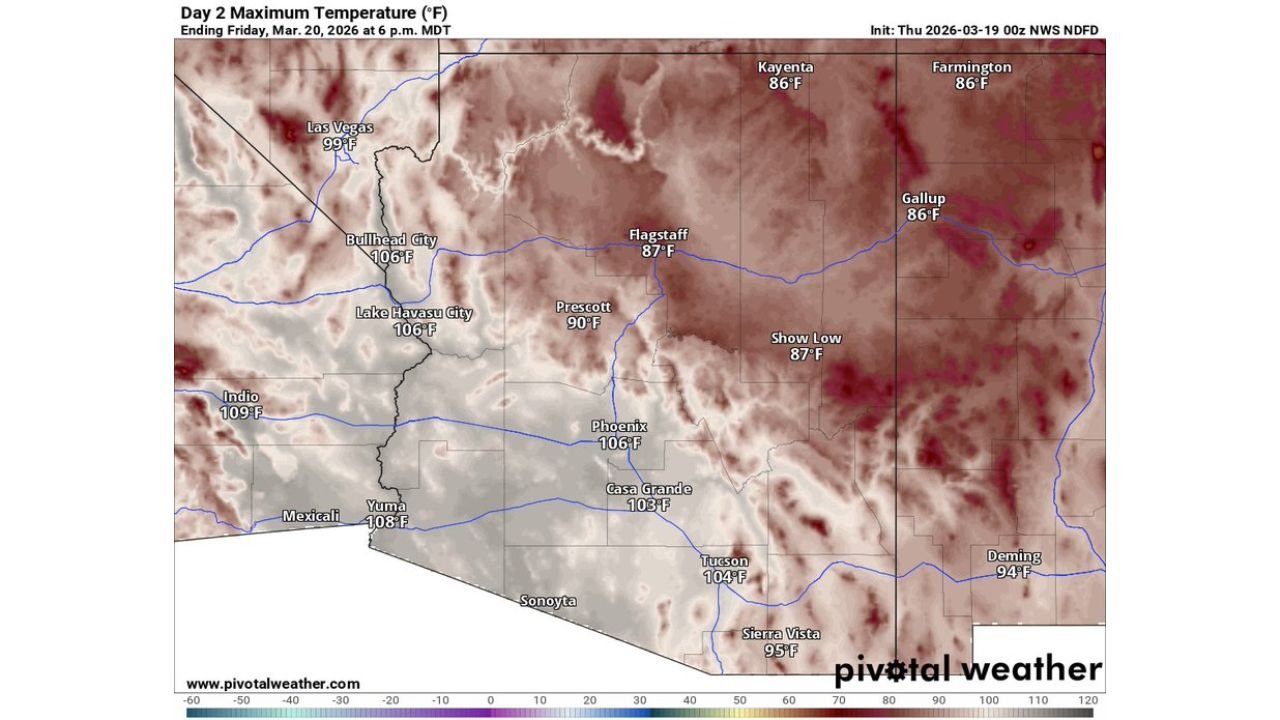
ARIZONA — A stunning and highly unusual March heat surge is targeting northern Arizona this week, and Flagstaff could be on the verge of rewriting its climate history.
According to forecast projections, the National Weather Service is predicting a high of 87°F in Flagstaff on Friday — a number that would obliterate the city’s standing March record of 73°F by an astonishing 14 degrees.
Flagstaff’s Current March Record: 73°F
Historical climate data shows that the hottest March temperature ever recorded in Flagstaff, Arizona is 73°F, a mark reached three times:
- March 31, 1966
- March 26, 1988
- March 17, 2007
No March day in recorded history has ever exceeded that value.
Now, forecasters are projecting 87°F — a temperature that would not just break the record, but crush it by a margin rarely seen in monthly climate statistics.
Forecast Map Shows Widespread Extreme Heat
Temperature projections across Arizona and the Southwest highlight the scale of this heat event:
- Flagstaff: 87°F
- Prescott: 90°F
- Phoenix: 106°F
- Casa Grande: 103°F
- Tucson: 104°F
- Yuma: 108°F
- Bullhead City & Lake Havasu City: 106°F
- Show Low: 87°F
Even higher-elevation communities like Flagstaff, which typically remain cool in March due to its 7,000-foot elevation, are expected to see temperatures that resemble early summer rather than late winter.
Why 87°F in Flagstaff Is So Extreme
Flagstaff is known for its high-altitude climate, with average March highs typically in the 50s. Snowfall in March is not uncommon, and overnight freezes are routine.
A jump to 87°F represents a departure of more than 30 degrees above normal — a truly anomalous event for this time of year.
Breaking a record by 1–2 degrees is significant. Breaking it by 14 degrees would place this event in the realm of historic climate anomalies.
What’s Driving the Heat?
Meteorologists point to a strong and persistent upper-level ridge dominating the western United States. This atmospheric setup compresses and warms air as it sinks, leading to widespread clear skies and intense solar heating.
The pattern is impacting not only Arizona but much of the Southwest, including:
- Southern California
- Nevada
- Utah
- New Mexico
- West Texas
However, Flagstaff’s forecast stands out because of how dramatically it exceeds historical benchmarks.
Broader Impacts
Such extreme early-season heat can trigger:
- Rapid snowmelt in higher elevations
- Increased wildfire risk
- Elevated energy demand
- Early-season heat stress concerns
For a mountain city accustomed to cool March afternoons, temperatures approaching 90°F could have wide-ranging local impacts.
A Climate Record on the Brink
If Flagstaff reaches 87°F as forecast, it would not merely set a new March record — it would establish one by a margin so large that it would redefine what is considered possible for early spring in northern Arizona.
Residents are urged to stay informed as this remarkable heat event unfolds.
Stay with WaldronNews.com for continued coverage of this developing historic heatwave across Arizona and the western United States.