
North Carolina and South Carolina See Smoke Drift Into Charlotte and Columbia as Prescribed Burns Near Newberry Send Plumes Northeast During Peak Spring Fire Season
CHARLOTTE, NORTH CAROLINA — If skies have looked hazy across parts of the Carolinas, there’s a clear reason: it’s peak spring prescribed burn season, and smoke from controlled fires in South Carolina near Newberry is drifting northeast into Charlotte and surrounding communities.
Satellite imagery confirms a visible smoke plume stretching from central South Carolina toward southern North Carolina, carried by prevailing winds.
What’s Causing the Smoke? Prescribed Burns, Not Wildfires
Land managers and the U.S. Forest Service conduct prescribed burns each spring to clear dead winter vegetation and reduce fuel loads. These controlled fires:
- Remove dormant grasses and brush
- Lower wildfire risk later in the year
- Help maintain ecosystem balance
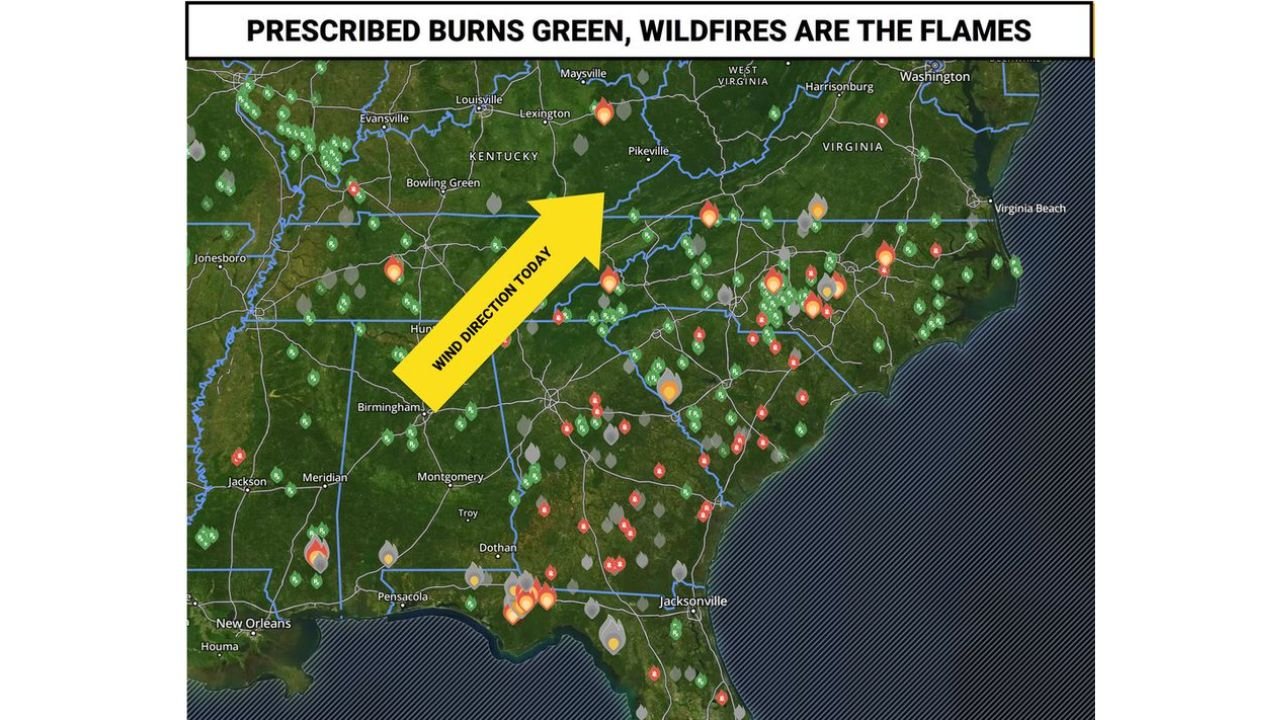
On regional fire maps, prescribed burns are marked in green, while wildfires appear in red. Across Georgia, Alabama, South Carolina and North Carolina, dozens of controlled burns are underway.
The fire responsible for much of the smoke impacting Charlotte appears to be a large prescribed burn near Newberry, South Carolina, clearly visible in morning satellite imagery.
Why the Smoke Is Blowing Into Charlotte
A strong southwest-to-northeast wind flow is steering smoke plumes across the region.
A large yellow arrow on the regional map indicates the day’s wind direction pushing smoke from:
- Central and western South Carolina
- Through the Charlotte metro area
- Toward parts of western and central North Carolina
Satellite imagery shows the smoke plume moving northeast from near Greenwood and Newberry toward Charlotte, Rock Hill and Kannapolis.
Peak Burning Happens in the Afternoon
Prescribed fires typically intensify during the mid to late afternoon, when:
- Relative humidity drops
- Winds increase
- Mixing heights improve
This means smoke impacts can become more noticeable later in the day. According to regional forecasts, this pattern could repeat through the weekend and even into next week as fire season continues.
Why Spring Is Prime Burn Season
Spring is ideal for prescribed burns because:
- Vegetation is dry from winter dormancy
- Controlled burns reduce fuel ahead of summer wildfire season
- Weather windows are more predictable
However, when winds align toward populated areas, smoke can temporarily reduce visibility and impact air quality.
Should Residents Be Concerned?
Prescribed burns are carefully managed and monitored, but smoke can still cause:
- Hazy skies
- Mild air quality concerns
- Reduced visibility during heavier plume periods
Residents with respiratory sensitivities may notice symptoms during peak burn hours.
There is no indication of a major uncontrolled wildfire near Charlotte at this time — the visible smoke is tied to planned land management operations in South Carolina.
What to Expect Next
As long as wind flow remains from the southwest, smoke from burns in South Carolina and Georgia could continue drifting into parts of North Carolina, especially during afternoon hours.
Air quality conditions should improve overnight as winds weaken and smoke disperses.
Stay with WaldronNews.com for updates on regional fire activity and changing weather conditions across the Carolinas.