
Arizona and California Shatter U.S. March Heat Record as Temperatures Hit 112° Near Yuma, Crushing Normal 81° Average
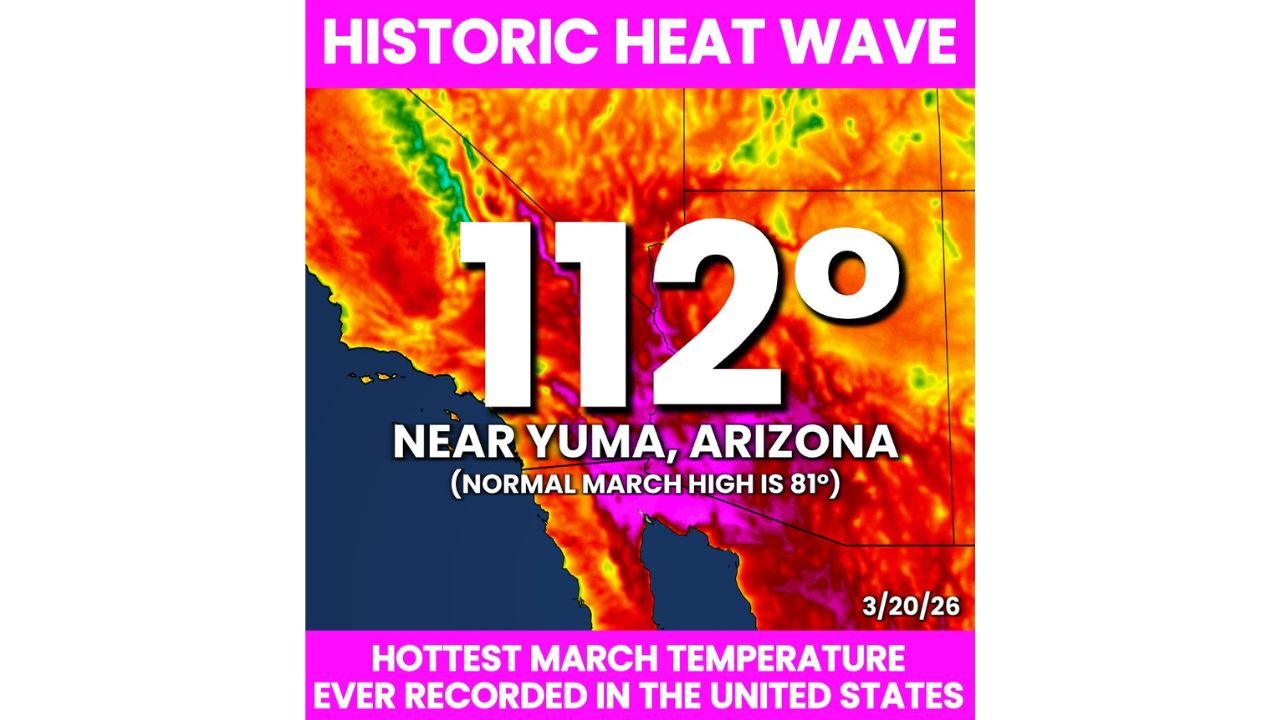
YUMA, AZ — An extraordinary surge of desert heat rewrote the U.S. climate record books Friday as temperatures soared to 112 degrees near Yuma, Arizona, marking what officials describe as the hottest March temperature ever recorded in the United States.
The historic reading occurred March 20, 2026, during an intense early-season heat wave that impacted multiple sites across southern Arizona and southeastern California.
112° in March — Nearly 30 Degrees Above Normal
To put the record into perspective, the average high temperature for the Yuma area in March is 81 degrees. Friday’s peak of 112 degrees was an astonishing 31 degrees above normal, a departure more typical of mid-summer extremes rather than late March.
While desert communities are accustomed to triple-digit heat in June, July, and August, temperatures reaching 112 degrees this early in the year are virtually unheard of.
Multiple Sites Affected in Arizona and California
The record-setting heat was not isolated to a single location. Multiple observation sites across:
- Southern Arizona
- Southeastern California
reported extreme temperatures during the event, with readings clustering near and above the 110-degree mark.
The core of the heat centered near the lower Colorado River Valley, including areas close to Yuma.
Why This Is So Unusual
March in the desert Southwest typically features warm afternoons and cool mornings, with most highs ranging from the upper 70s to low 80s.
Reaching 112 degrees in March represents:
- A dramatic departure from seasonal averages
- An unprecedented early-season heat intensity
- A signal of unusually strong high-pressure dominance over the region
Such extreme warmth this early can also stress infrastructure, agriculture, and residents who are not yet acclimated to summer-like heat.
Summer Conditions Arrive Months Early
Meteorologists note that while 112-degree readings are common in July and August across the lower deserts, seeing that magnitude in March is exceptionally rare.
This event underscores how rapidly temperatures can escalate under a strong ridge of high pressure, especially in arid desert environments where dry air allows for intense solar heating.
Cooling Trend Expected
Relief is expected as a weather system moves through the region, allowing temperatures to ease slightly heading into the upcoming days. However, even with cooling, readings are likely to remain above seasonal averages in parts of the Southwest.
A Historic Climate Milestone
Friday’s 112-degree reading near Yuma now stands as a remarkable benchmark in U.S. climate history — a reminder that even transitional seasons like March can produce extraordinary extremes under the right atmospheric conditions.
Stay with WaldronNews.com for continued updates on record-breaking temperatures, heat wave developments, and shifting weather patterns across the United States.