
Florida Faces First Taste of Rainy Season With Scattered Storms and Up to 1.20 Inches of Rainfall This Weekend Through Next Week Including Tampa, Orlando, Miami and North Port With Isolated 2 to 4 Inch Totals Possible
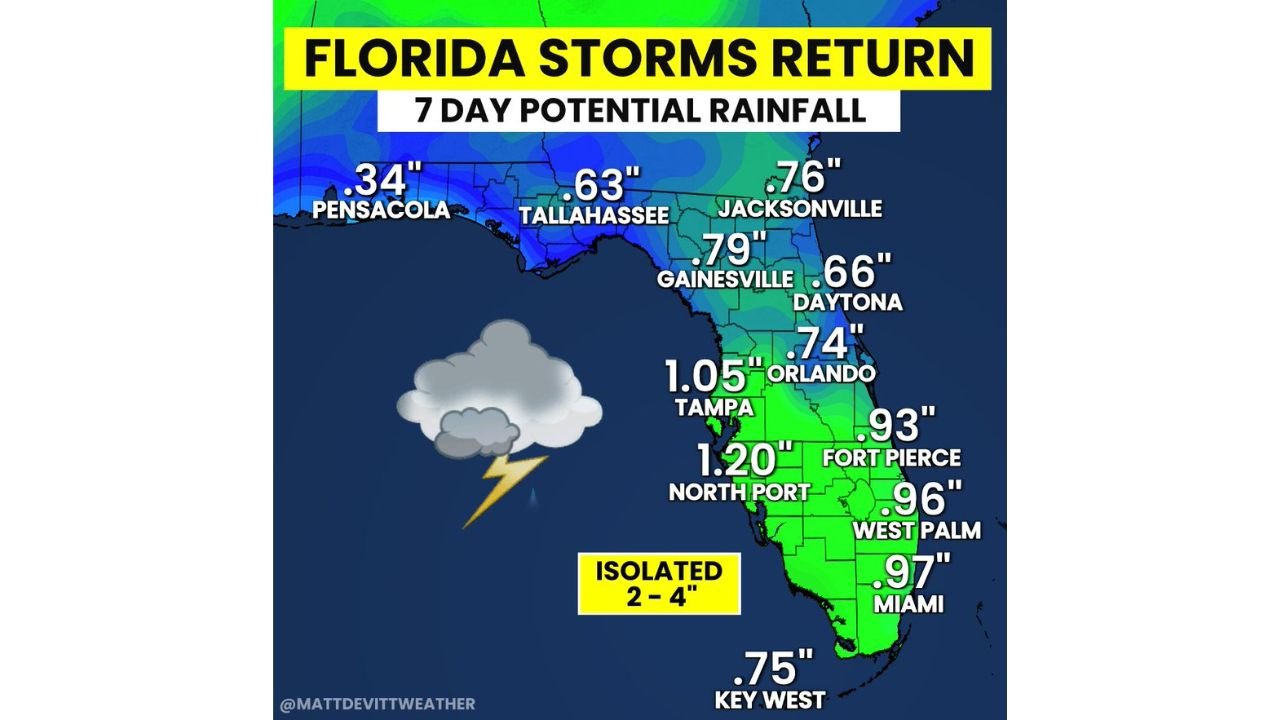
TAMPA, Florida – Florida’s first taste of rainy season is arriving this weekend and continuing through next week, with scattered afternoon and evening storms bringing rainfall totals up to 1.20 inches on average across the state over the next 7 days. Isolated spots could see 2 to 4 inches, and with conditions still very dry, lightning sparking new fires remains a concern alongside the welcome rain.
City by City 7 Day Rainfall Totals
These are average rainfall totals per city over the next 7 days starting this weekend. Remember these are scattered, hit-or-miss storms, meaning one neighborhood could see several inches while a neighbor a few miles away sees almost nothing:
- North Port, Florida leads all cities with a 7 day average of 1.20 inches, placing it in the highest rainfall zone on the map through next week.
- Tampa, Florida is projected to see an average of 1.05 inches over the next 7 days as rainy season storms fire up afternoon and evening through next week.
- Miami, Florida comes in at 0.97 inches average over the 7 day period, with isolated spots nearby capable of hitting 2 to 4 inches if heavier cells develop.
- West Palm, Florida is projected at 0.96 inches average through next week, sitting within the higher rainfall zone across South Florida.
- Fort Pierce, Florida faces a 0.93 inch average over the next 7 days as scattered storms push onshore through the weekend and into next week.
- Gainesville, Florida leads North Central Florida with a 0.79 inch average over the 7 day period as rain chances increase through next week.
- Orlando, Florida is projected at 0.74 inches average through next week with scattered afternoon and evening storm chances returning daily.
- Jacksonville, Florida comes in at 0.76 inches average over the next 7 days, sitting in the moderate rainfall zone for North Florida.
- Key West, Florida is projected at 0.75 inches average over the 7 day period with scattered storm chances through next week.
- Daytona, Florida faces a 0.66 inch average through next week as scattered hit-or-miss storms push through the area afternoon and evening.
- Tallahassee, Florida is projected at 0.63 inches average over the next 7 days with lighter storm coverage expected across the Panhandle region.
- Pensacola, Florida sees the lightest totals on the map at 0.34 inches average over the next 7 days, sitting on the drier western edge of the rainfall zone.
The Lightning Fire Risk Nobody Is Talking About
While the returning rain is welcome news across Florida, forecasters are pointing out a serious concern that comes with it. Conditions across Florida remain very dry, meaning any lightning that strikes ahead of or away from rainfall could spark new wildfires across dry vegetation. If you see a storm approaching your area, get indoors immediately and do not assume lightning will be accompanied by enough rain to prevent a fire.
How Florida Rainy Season Storms Work
These are not the kind of storms that soak an entire region at once. Florida rainy season storms are scattered and hit-or-miss, firing up primarily during the afternoon and evening hours as the sun heats the surface and triggers towering storm clouds. One neighborhood in Tampa or Orlando could receive several inches of rain while another neighborhood just a few miles away sees almost nothing at all. The totals shown are city averages, not guaranteed amounts for every neighborhood.
What to Watch For This Weekend and Next Week
Anyone across Florida from Pensacola to Miami and Key West should expect afternoon and evening storm chances to increase starting this weekend and continuing through next week. Keep weather alerts active on your phone each afternoon. Stay off open water, away from open fields and out of open structures if storms develop near you, as lightning is the primary life safety threat with these storms.
WaldronNews.com will continue tracking Florida’s returning rainy season storm pattern and will provide updates as rainfall totals, lightning activity and any fire weather concerns develop through next week.