
Michigan Snow Squalls Trigger Hazardous Travel Along I-96 as Rapid Accumulation and Near-Whiteout Conditions Develop
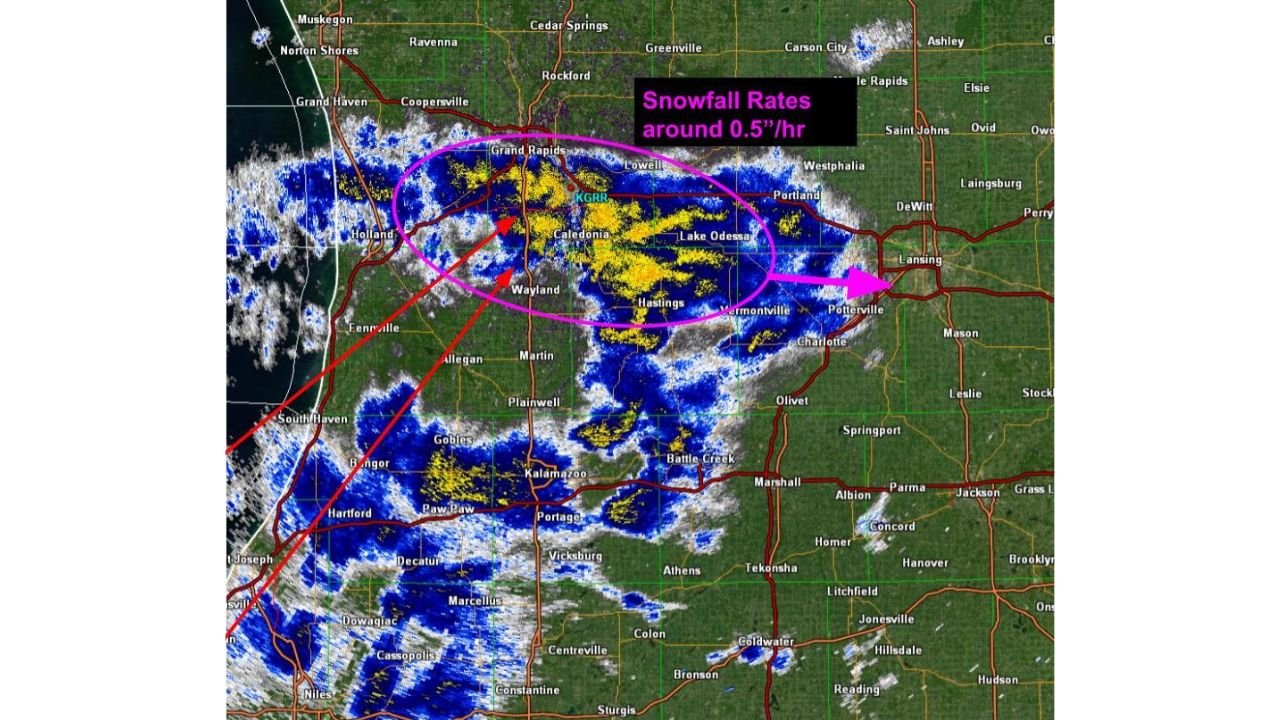
MICHIGAN — Rapidly developing snow squalls are creating dangerous travel conditions Sunday evening across West and Central Michigan, particularly along and south of Interstate 96, where quickly accumulating snow and sharp drops in visibility are being reported.
Radar imagery and traffic camera feeds show bands of moderate to heavy snow sweeping east across the region, with snowfall rates approaching 0.5 inches per hour in the strongest cells. These squalls are capable of reducing visibility to under one mile within minutes, creating slick road surfaces and sudden whiteout conditions that can catch drivers off guard.
Where Conditions Are Most Dangerous
The most hazardous travel is being observed:
- Along and south of I-96, including stretches near Grand Rapids, Lowell, Lake Odessa, and Portland
- Portions of Barry, Ionia, Kent, Allegan, and Eaton counties
- Secondary highways feeding into I-96, where untreated pavement is rapidly becoming snow-covered
Michigan Department of Transportation (MDOT) traffic cameras show snow-covered lanes and reduced visibility, particularly near Byron Center and U.S.-131, where traffic has slowed significantly.
Why Snow Squalls Are So Dangerous
Unlike steady snowfall, snow squalls:
- Develop very quickly
- Cause abrupt visibility drops
- Lead to rapid ice and snow accumulation
- Often arrive with gusty winds, worsening blowing snow
These conditions significantly increase the risk of multi-vehicle accidents, especially during evening travel hours when pavement temperatures drop.
Travel Advisory for Drivers
Officials are urging motorists to:
- Reduce speed immediately when encountering heavy snow
- Increase following distance
- Avoid sudden braking
- Use headlights and remain alert for stopped or slow-moving traffic
- Delay travel if possible until squalls pass
Snow squalls typically last 30 to 60 minutes, but their impacts can linger as snow-covered roads remain slick even after visibility improves.
What Happens Next
Snow showers are expected to gradually taper later tonight, but additional brief squalls remain possible as colder air continues to move across the state. Road crews are actively treating highways, but conditions may change faster than plows can respond during intense bursts.
Drivers across West and Central Michigan are advised to stay weather-aware, monitor local alerts, and use caution if traveling along I-96 and nearby routes this evening.