
Michigan, Ohio, Pennsylvania, New York, and Great Lakes States See Above-Average Ice Coverage as January 2026 Winter Cold Holds Firm
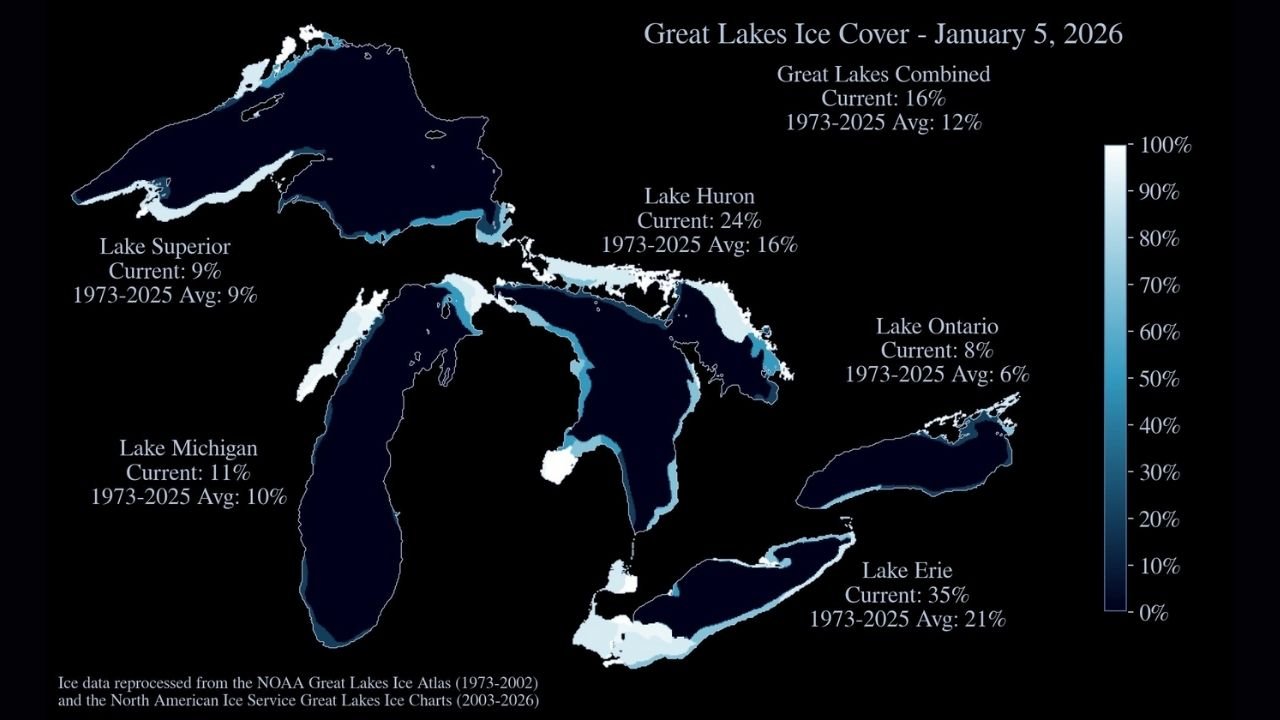
GREAT LAKES REGION — Ice coverage across the Great Lakes has increased notably heading into early January 2026, with new data showing combined ice cover at 16%, running above the long-term seasonal average. The latest figures highlight stronger early-season freezing across several lakes, particularly Lake Erie, as colder air remains entrenched across the Midwest and Northeast.
Great Lakes Ice Coverage Now Above Seasonal Norms
As of January 5, 2026, the combined ice coverage across all five Great Lakes stands at 16%, compared to a 1973–2025 average of 12% for this point in the winter season. This indicates a faster-than-normal freeze developing as sustained cold temperatures continue to dominate much of the region.
While early January often brings the first meaningful expansion of lake ice, this year’s coverage suggests winter conditions are establishing more firmly than average, especially in the eastern Great Lakes.
Lake-by-Lake Breakdown Shows Sharp Differences
The ice extent varies significantly from lake to lake, reflecting differences in depth, water temperature, and exposure to Arctic air masses.
- Lake Superior: 9% ice coverage, matching its long-term average
- Lake Michigan: 11% ice coverage, slightly above its 10% average
- Lake Huron: 24% ice coverage, well above the 16% average
- Lake Erie: 35% ice coverage, far exceeding its 21% average
- Lake Ontario: 8% ice coverage, above the 6% average
Lake Erie stands out as the most ice-covered lake, which is typical given its shallow depth, but the current percentage is notably higher than normal for early January.
Why Lake Erie Is Freezing Faster Than the Others
Lake Erie’s rapid ice growth is driven by a combination of shallow water depth, repeated cold air intrusions, and limited heat retention compared to deeper lakes like Superior and Michigan. With ice already covering over one-third of the lake, shoreline freezing and expanding pack ice are becoming more prominent across northern Ohio, western Pennsylvania, and southern Ontario.
This higher ice coverage can play a role in reducing lake-effect snowfall intensity later in the season, while also increasing the risk of ice jams and navigation challenges.
What This Means for the Rest of Winter
Above-average ice cover this early in the season often signals continued cold patterns, especially if Arctic air remains locked in across central and eastern North America. If colder-than-normal temperatures persist, ice coverage is likely to expand rapidly through mid-January, potentially affecting:
- Commercial shipping routes
- Lake-effect snow production
- Coastal ice buildup and ice shove risks
- Regional temperature moderation near the lakes
However, ice conditions can still fluctuate if periods of milder air move in later this month.
Looking Ahead
With January still in its early stages, forecasters will closely monitor how upcoming cold waves and storm systems influence ice growth across the Great Lakes basin. For now, the data confirms that winter is firmly asserting itself, especially across lakes Huron and Erie.
Stay with WaldronNews.com for continued Great Lakes ice updates, winter weather trends, and regional climate tracking as the 2026 winter season unfolds.