
Pennsylvania and Ohio Shatter Historic Cold Records as Arctic Blast Drives Pittsburgh to −11°F on January 31
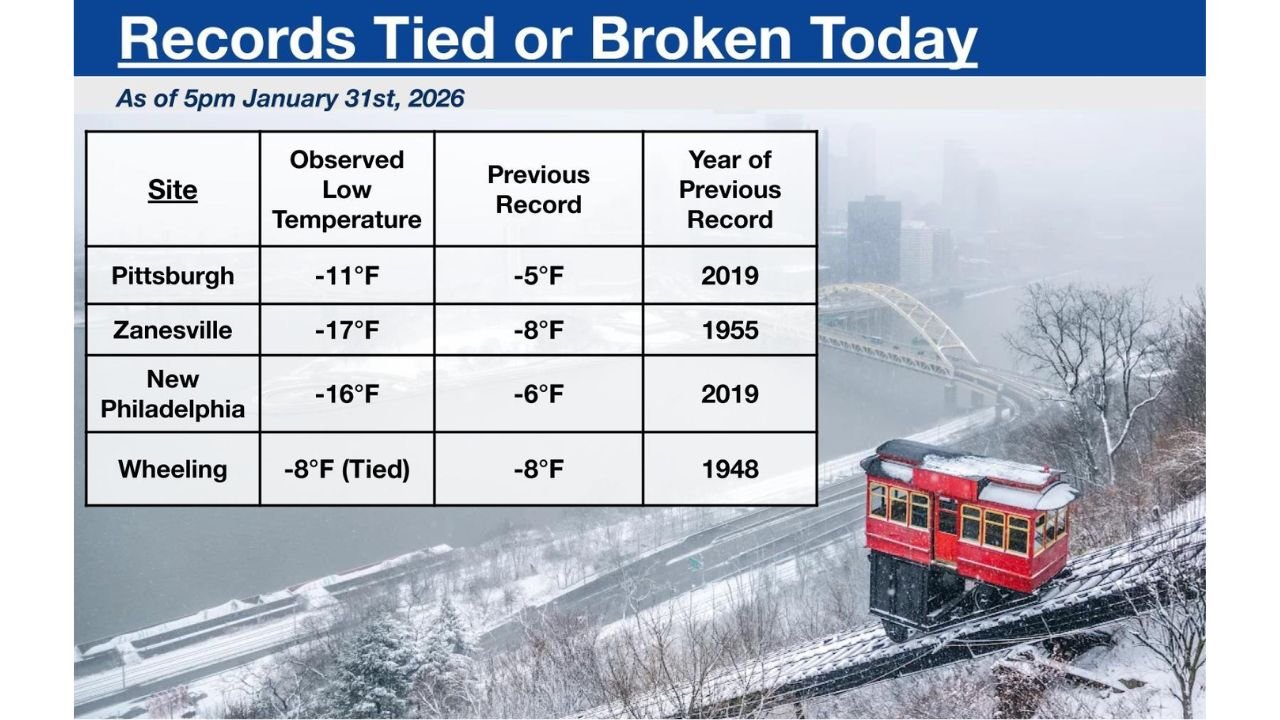
PENNSYLVANIA — An intense Arctic outbreak tightened its grip on the Upper Ohio Valley on January 31, delivering historic cold temperatures across western Pennsylvania and eastern Ohio and pushing multiple cities to record-breaking lows not seen in decades.
According to data released by the National Weather Service in Pittsburgh, the city of Pittsburgh plunged to −11°F, breaking its previous January 31 record of −5°F set in 2019. The extreme cold capped off one of the most severe late-January cold snaps in recent regional history.
Pittsburgh Breaks Daily Record as Cold Deepens
The −11°F reading in Pittsburgh officially established a new daily record low for January 31, underscoring the strength of the Arctic air mass that surged southward into the Mid-Atlantic and Ohio Valley.
Forecasters noted that temperatures fell rapidly overnight under clear skies, fresh snow cover, and light winds — ideal conditions for radiational cooling that allowed readings to drop well below earlier expectations.
Multiple Cities Set or Tie Longstanding Records
Pittsburgh was not alone.
Several nearby climate sites also set or tied daily low temperature records, some of which had stood for more than half a century:
- Zanesville, Ohio: −17°F
- Previous record: −8°F (1955)
- New Philadelphia, Ohio: −16°F
- Previous record: −6°F (2019)
- Wheeling, West Virginia: −8°F (tied)
- Previous record: −8°F (1948)
The magnitude of these temperature departures highlights how unusually cold this air mass was, even by mid-winter standards.
Why This Cold Was So Extreme
Meteorologists attribute the historic lows to a deep Arctic high-pressure system settling directly over the region, combined with snowpack that enhanced overnight cooling.
Key contributing factors included:
- Clear skies allowing heat to escape rapidly
- Calm winds minimizing atmospheric mixing
- Fresh snow reflecting heat away from the surface
- A prolonged Arctic air source rather than a brief surge
This combination created ideal conditions for record-breaking cold across western Pennsylvania and surrounding states.
Impacts Across the Region
The extreme cold brought dangerous wind chills, frozen pipes, vehicle issues, and increased strain on heating systems. Local officials urged residents to limit outdoor exposure and check on vulnerable populations, especially during the coldest overnight hours.
Even areas that did not set records still experienced temperatures well below normal, reinforcing the widespread nature of the Arctic outbreak.
Cold Pattern Still Being Monitored
Forecasters caution that while temperatures may slowly moderate in the coming days, additional cold snaps remain possible as winter patterns stay active into early February.
For now, January 31, 2026, will be remembered as a day when historic cold rewrote record books across Pennsylvania, Ohio, and West Virginia.
Did your city set a record during this Arctic blast? Share your temperature reports and experiences with WaldronNews, and stay tuned for continued coverage of extreme winter weather across the region.