
Edwardsburg, Michigan Storm Sparks Lightning Surge as Officials Urge Public to Stop Flooding NWS With Radar Screenshots
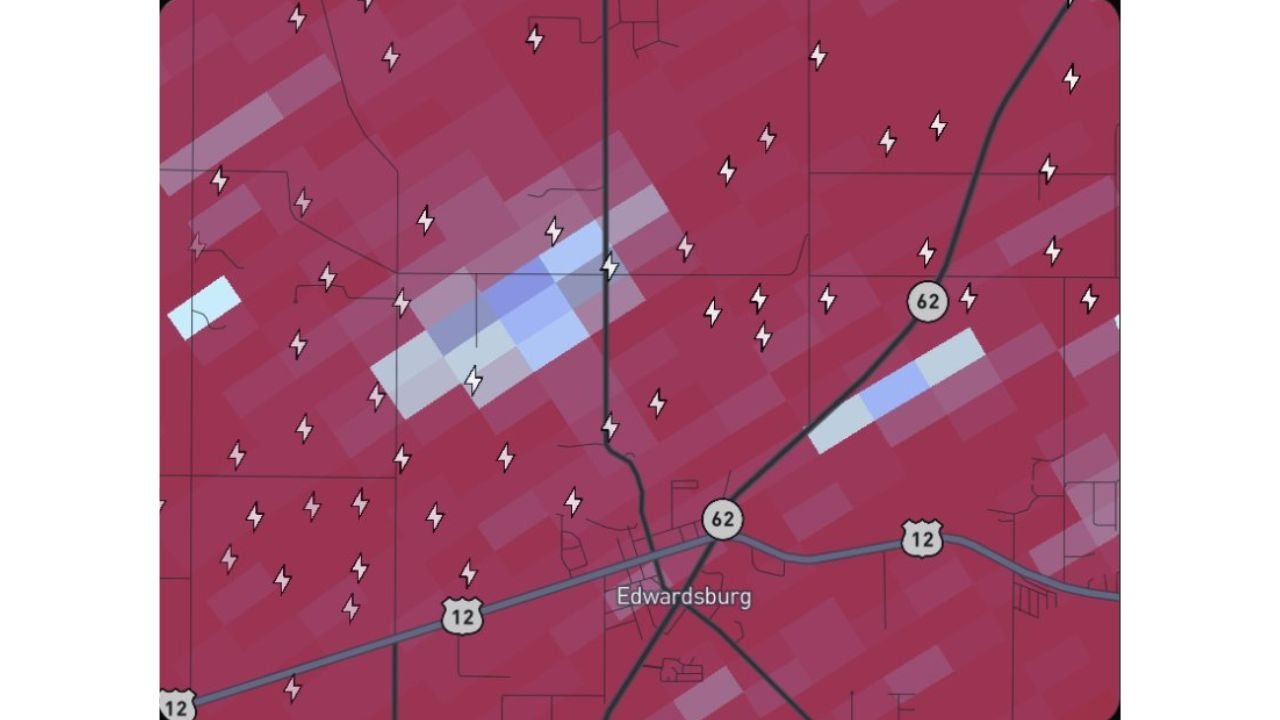
EDWARDSBURG, MICHIGAN — A burst of intense thunderstorm activity moving across southern Michigan sparked widespread lightning near Edwardsburg, prompting renewed warnings about the dangers of severe weather and growing concerns over how storm reports are being shared with federal weather offices.
Radar data from the storm shows heavy lightning activity across the Edwardsburg area, with clusters of electrical strikes surrounding the town and nearby rural communities. The lightning surge developed as thunderstorms passed through the region, creating dangerous conditions for residents traveling along U.S. Route 12 and Michigan Route 62, two major roads intersecting near Edwardsburg.
While storms produced frequent lightning flashes across the area, attention quickly turned to a separate issue: the growing number of people sending radar screenshots and unofficial reports directly to National Weather Service offices during active weather events.
Lightning Activity Intensifies Near Edwardsburg
Storm tracking data indicates the thunderstorm passed directly over the Edwardsburg region in Cass County, where lightning density increased rapidly during the event.
Radar imagery shows repeated lightning strikes across nearby rural sections, including areas surrounding:
- Edwardsburg, Michigan
- Communities along Highway 62
- Areas west and east of U.S. Route 12
These lightning bursts typically occur when thunderstorms reach peak intensity, often accompanied by strong updrafts and heavy rainfall. Even when tornadoes are not present, lightning remains one of the most dangerous hazards during severe storms.
Residents in the area reported rapid flashes across the sky as the storm moved overhead, highlighting the electrical energy contained within the system.
Concerns Grow Over Public Reports During Storm Events
As the storm developed, officials noted an increasing trend that has complicated weather operations during active severe weather situations.
Many people have begun tagging weather offices or calling them directly with radar screenshots showing storms, believing they are providing helpful information. However, radar imagery is already monitored continuously by weather agencies, and these types of reports often add unnecessary pressure during critical moments.
Weather offices rely on verified ground reports of real conditions, such as confirmed tornado sightings, hail size, wind damage, or flooding. Screenshots of radar images do not provide new information and can distract from urgent storm monitoring.
The issue has become more noticeable during active weather days when storms are producing lightning, hail, or potential tornado signatures.
Why Accurate Reports Matter During Severe Weather
During severe storms, weather agencies depend on specific information from the public that cannot always be detected by radar alone.
Useful reports typically include:
- Confirmed tornado sightings
- Large hail measurements
- Wind damage, such as fallen trees or power lines
- Flooding conditions
These types of observations help improve warnings and allow emergency responders to react quickly.
However, sending radar images or calling offices about what appears on radar maps does not provide additional data that forecasters can use.
Storms Continue Across the Region
The thunderstorm that passed through Edwardsburg was part of a broader weather pattern affecting portions of the Midwest, where unstable air and shifting weather boundaries are producing scattered thunderstorms across multiple states.
While the Edwardsburg storm mainly produced heavy lightning and rain, similar storms in the region can quickly intensify and create hazardous conditions.
Lightning strikes remain one of the most common weather-related hazards during summer storms and can occur several miles away from the heaviest rainfall, making it important for residents to seek shelter whenever thunder is heard.
Residents Urged to Monitor Weather Safely
Severe weather can change quickly, particularly during thunderstorm outbreaks when lightning and heavy rainfall develop rapidly.
Officials encourage residents to rely on official alerts, weather radios, and trusted weather information sources during storms rather than attempting to interpret radar imagery themselves.
Lightning, strong winds, and heavy rain can create dangerous travel conditions, especially near highways and rural roadways.
Stay with WaldronNews for continued updates on storms affecting Michigan and the Midwest as weather conditions evolve.