
Democratic Republic of Congo’s Lakes Mai Ndombe and Tumba Found Releasing 2,000–3,500-Year-Old Carbon, Study Warns of Hidden Climate Risk
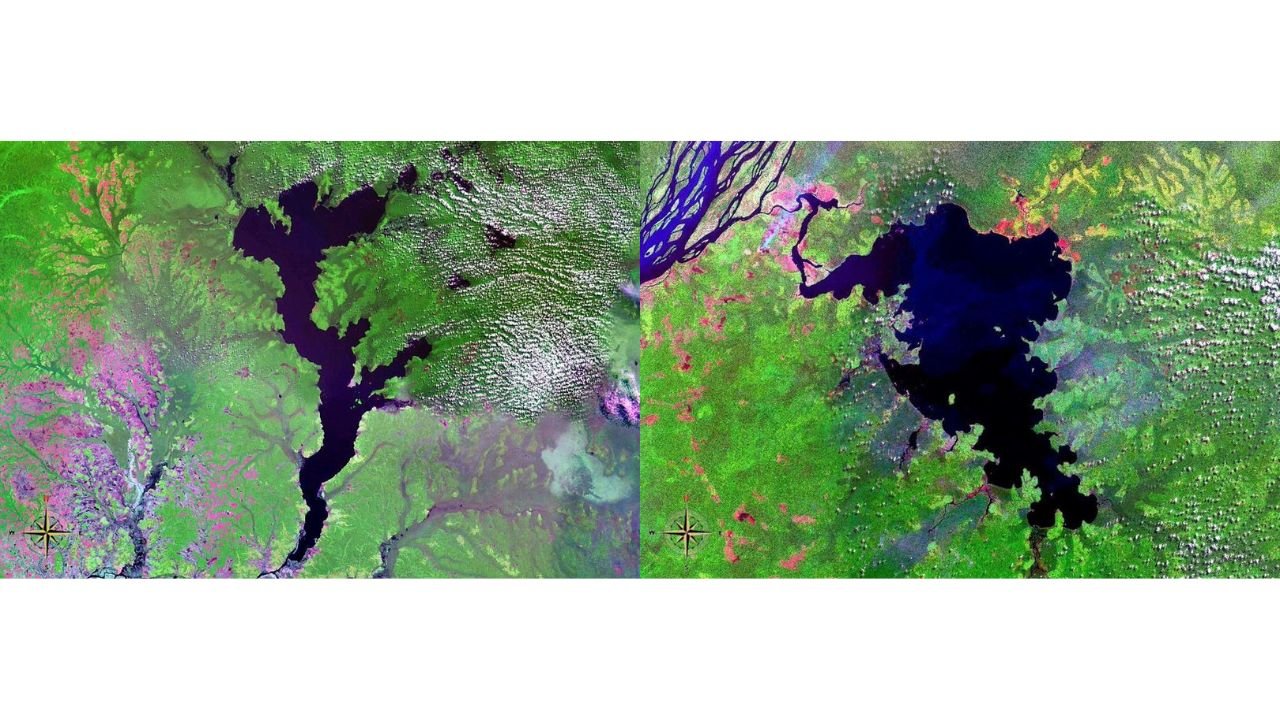
DEMOCRATIC REPUBLIC OF CONGO — Two vast tropical lakes in Central Africa are releasing ancient carbon that had been locked away for thousands of years, raising new concerns about the stability of one of the planet’s most important carbon stores.
Researchers from ETH Zurich have found that Lakes Mai Ndombe and Tumba in the western Democratic Republic of Congo (DRC) are emitting carbon dioxide derived not just from recent plant material, but from peat deposits that are between 2,000 and 3,500 years old.
The findings, published in Nature Geoscience in February 2026, challenge long-held assumptions about how securely tropical peatlands store carbon.
Ancient Carbon Is Escaping
By analyzing dissolved carbon in both lakes, scientists discovered that roughly 40% of the CO₂ emissions originate from ancient peat deposits surrounding the lakes.
That means nearly half of the carbon being released into the atmosphere is not part of the modern carbon cycle — it is carbon that had been trapped underground for millennia.
Peatlands are typically considered long-term carbon reservoirs. Over thousands of years, plant material accumulates in waterlogged soils, forming thick peat layers that store massive amounts of carbon. In theory, as long as those peatlands remain intact and saturated, the carbon stays locked away.
But this study shows that in parts of the Congo Basin, that carbon is not entirely stable.
Where the Lakes Are Located
Lake Mai Ndombe lies west of Kinshasa in western DRC, while Lake Tumba sits further north within the vast Congo Basin. Both lakes are surrounded by tropical peatlands — ecosystems that represent one of the largest carbon stores on Earth.
Satellite imagery of the region shows expansive wetland landscapes with dark, water-filled basins embedded in lush green forest. These areas have long been considered crucial natural buffers against climate change.
However, the new findings indicate that these lakes are acting as conduits, transferring old carbon from peat soils into the atmosphere via dissolved carbon emissions.
Why This Matters for Climate Change
The implications go beyond Central Africa.
Tropical peatlands have been widely regarded as relatively stable carbon sinks compared to Arctic peat systems, which are already known to release carbon as permafrost thaws.
But if peatlands in the Congo Basin are vulnerable to disturbance — whether from climate change, land-use shifts, deforestation, or hydrological changes — the stored carbon could become increasingly mobile.
The study highlights what researchers describe as a “hidden climate risk.”
If warming temperatures, changing rainfall patterns, or drainage activities disrupt peat stability, more ancient carbon could be released into lakes and eventually into the atmosphere as CO₂.
That would effectively convert a long-term carbon sink into a carbon source.
A Challenge to Existing Assumptions
For decades, scientists have viewed tropical peatlands as robust carbon vaults. The assumption was that while some surface carbon cycles through ecosystems, deeper peat layers remain largely isolated.
This new research complicates that picture.
The discovery that nearly 40% of lake-emitted CO₂ is derived from peat deposits dating back thousands of years suggests that these systems are more dynamic than previously believed.
Rather than being permanently sealed, portions of the peat carbon appear to be interacting with aquatic systems and contributing to atmospheric greenhouse gases.
What Comes Next
Researchers emphasize that more studies are needed to determine:
- Whether similar emissions are occurring in other parts of the Congo Basin
- How climate variability influences carbon leakage
- Whether land-use changes could accelerate the process
The Congo Basin is the second-largest tropical rainforest on Earth, and its peatlands store billions of tons of carbon. Any shift in how that carbon behaves could have global climate implications.
For now, the findings serve as a warning: even ecosystems long considered stable may hold unexpected vulnerabilities.
As global temperatures continue to rise, understanding how ancient carbon stores respond will be critical — not just for Central Africa, but for the planet as a whole.
WaldronNews.com will continue tracking major climate and environmental research developments worldwide.