
Florida, Georgia and the Southeast Are Living Through the Driest 6 Months Ever Recorded as 100% of the Region Hits Drought
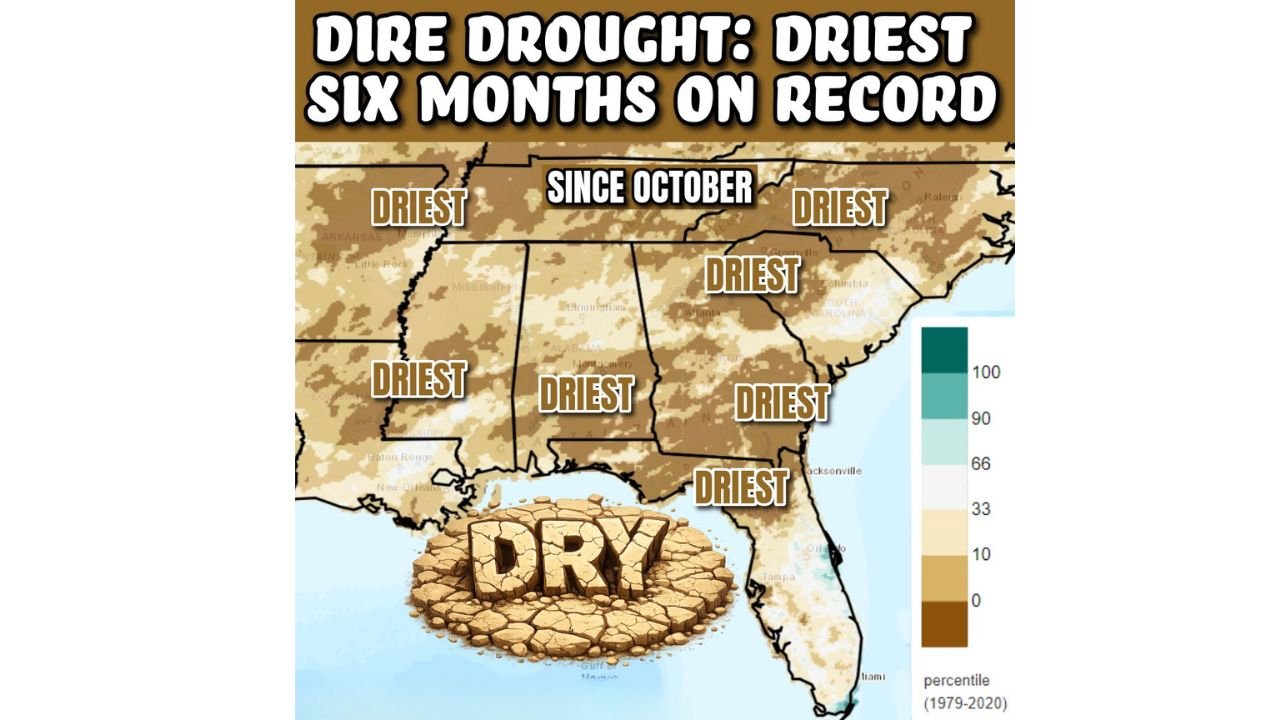
ATLANTA, Georgia — The entire Southeast United States is locked in a historic drought crisis — and the numbers are staggering. Every single part of the region is currently in drought, with 83% classified as severe or worse, making this the driest six-month stretch on record since October.
From Arkansas to Florida, the darker brown covering the map tells the same story everywhere: record dry. Areas running 15 to 20 inches below normal rainfall over the past six months have left soils cracked, reservoirs stressed, and fire danger dangerously elevated across the region.
States Living Through Record Drought
Every state in the Southeast is affected, with most logging all-time dry records:
- Florida: Three-quarters of the state is in extreme drought — the worst classification — with northern Florida among the hardest hit
- Georgia: Atlanta and surrounding areas are deep in the driest stretch on record since 1979
- Alabama: Montgomery and Birmingham both sitting in record-dry territory going back to October
- Mississippi: Entire state blanketed in record low precipitation percentiles
- South Carolina: Columbia and the Upstate recording driest stretch on record
- North Carolina: Raleigh corridor included in the historic dry zone
- Louisiana: Baton Rouge and New Orleans area in the driest category
- Arkansas: Little Rock and surrounding regions matching record dry levels
Primary Threats From This Drought
Six months of record dryness creates cascading dangers across the region:
- Extreme fire danger — bone-dry vegetation across 100% of the Southeast creates explosive wildfire conditions with any spark or dry wind event
- Water supply stress — reservoirs, lakes, and groundwater sources running well below normal after six consecutive months of deficit rainfall
- Agricultural damage — crops and pastures across the region suffering from soil moisture deficits of 15 to 20 inches below what is normal for this time of year
- Record classification — this is not just a bad drought year; this is the driest on record going back to 1979 across the vast majority of the Southeast
Why This Is So Serious for Florida and Georgia
Atlanta, Georgia and the broader Southeast have seen drought before — but what makes this situation historically significant is the sheer geographic scope combined with the record-breaking intensity. Every region on the map is sitting at the zero percentile for rainfall, meaning no comparable six-month period since records began in 1979 has been this dry.
For Florida, the situation is particularly dire. Three-quarters of the state is in extreme drought, the second-worst classification possible. Northern Florida, which typically benefits from more regular rainfall patterns, is showing the same deep brown record-dry readings as the rest of the state. Tampa, Jacksonville, and Orlando area residents are all experiencing the effects — from unusually low lake levels to elevated wildfire smoke events.
The 15 to 20 inch rainfall deficit accumulated since October is not something a single rain event fixes. It takes weeks to months of above-normal precipitation to meaningfully recover from a hole this deep, and the longer the drought persists, the harder the rebound becomes.
Multi-Day Pattern
There is no quick fix in sight for the Southeast drought. While isolated rain chances return periodically to parts of the region, the large-scale atmospheric pattern has been stubbornly dry since October and breaking that pattern requires a significant shift. Week 2 forecasts show some potential for rainfall improvements across drought areas, but closing a 15 to 20 inch deficit will require sustained above-normal precipitation over many weeks — not days.
Fire weather conditions will remain elevated across the region on any dry and breezy days until meaningful drought relief arrives.
What to Watch Next
- Fire weather watches and warnings across Florida, Georgia, and the Carolinas on dry wind days
- Any tropical or subtropical moisture surges that could deliver significant rainfall totals
- Lake and reservoir levels across Georgia and Florida as summer water demand season approaches
- Agricultural reports from Alabama, Mississippi, and Arkansas as planting season continues under drought stress
- Whether Week 2 rainfall forecasts deliver meaningful drought relief to the most affected areas
Residents across Florida, Georgia, Alabama and the entire Southeast should remain aware of elevated fire danger and local water conservation measures. This drought is historic in scale and will take significant time and rainfall to recover from.
WaldronNews.com will continue tracking the Southeast drought and provide updates as conditions and rainfall chances develop.