
Michigan and Ohio Remain in ‘High’ Flu Activity Zone as Illinois and Wisconsin Trend Lower Ahead of Spring Warm-Up
GREAT LAKES REGION — As winter begins to loosen its grip and spring temperatures slowly rise, new data shows flu activity is declining across parts of the Midwest — but Michigan and Ohio remain firmly in the “high” category.
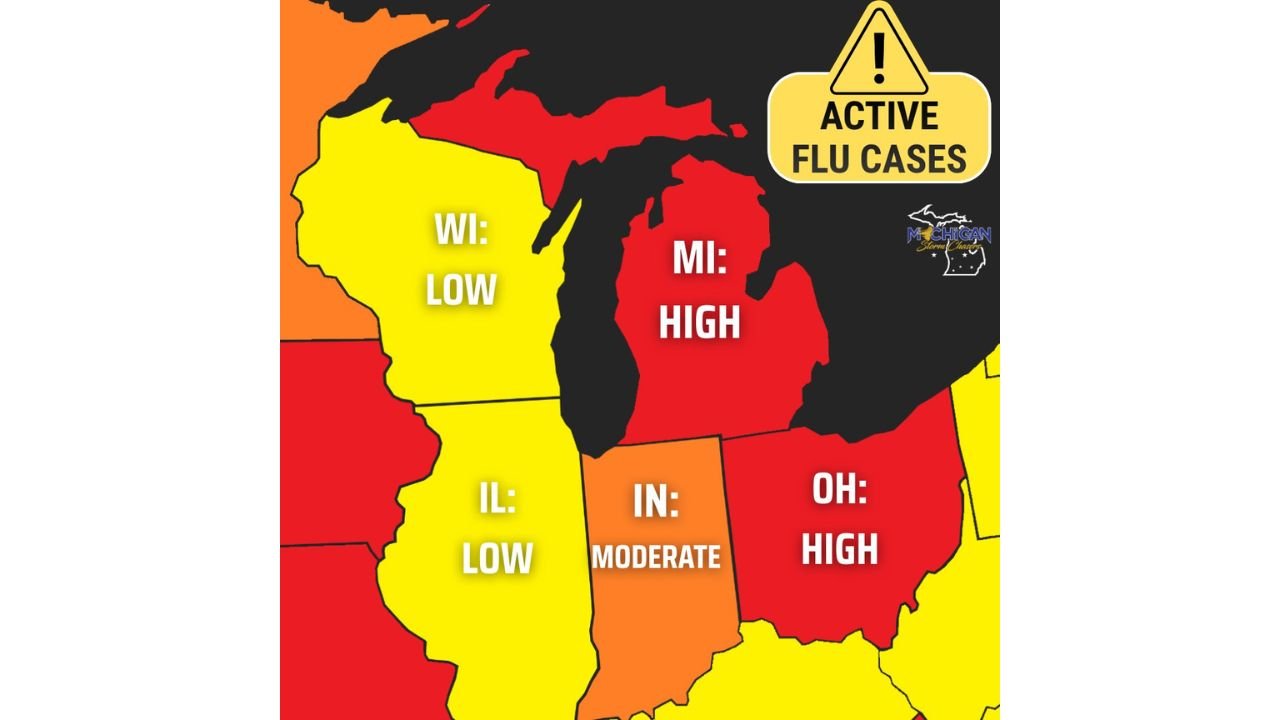
A regional influenza activity map highlights a clear divide across the Great Lakes states. While Illinois and Wisconsin are now categorized as “low,” Michigan continues to report high flu activity, alongside Ohio. Indiana currently sits in the “moderate” range.
Michigan and Ohio Still in the Red
Michigan and Ohio are both marked in red on the latest activity map, signaling continued widespread flu transmission.
Health experts note that although national trends are beginning to improve, these two states are lagging behind the broader decline. Elevated case numbers suggest ongoing community spread, particularly in densely populated areas.
The persistence of high activity indicates:
- Continued strain on healthcare systems
- Higher rates of school and workplace absenteeism
- Ongoing transmission in community settings
Officials emphasize that high classification does not necessarily mean cases are rising — but that activity remains significantly elevated compared to baseline levels.
Indiana in Moderate Category
Indiana is currently classified as “moderate,” positioned between the improving states to the west and the higher activity zones to the north and east.
This suggests:
- Active transmission remains present
- Cases may be trending downward but not yet at low levels
- Continued monitoring is necessary
If warming trends continue, Indiana could shift lower in the coming weeks.
Illinois and Wisconsin See Improvement
Illinois and Wisconsin are now labeled as “low” activity states.
That shift is likely influenced by:
- Rising daytime temperatures
- Reduced indoor crowding as weather improves
- Post-peak seasonal decline
As spring approaches, warmer conditions typically reduce virus survivability and transmission efficiency, contributing to a downward trend.
Why Michigan May Be Lagging
Michigan’s continued “high” designation may be influenced by:
- Dense urban centers
- School-related spread
- Delayed seasonal peak
- Regional weather variability
Ohio’s similar classification suggests shared transmission patterns across parts of the eastern Great Lakes region.
Spring Temperatures Expected to Help
Forecasters and public health experts agree that rising temperatures will likely continue pushing flu activity downward nationwide.
With spring right around the corner, warmer air and increased outdoor activity historically contribute to a steady decline in influenza cases.
However, experts caution that “high” activity classifications mean transmission is still active — and vulnerable populations should continue practicing preventative measures.
Bottom Line
While Illinois and Wisconsin show encouraging signs of improvement and Indiana trends moderate, Michigan and Ohio remain in the high flu activity category.
The coming weeks will be critical in determining how quickly the Great Lakes region transitions out of peak flu season.
WaldronNews.com will continue tracking regional health trends as updated data becomes available.