
Iowa, Illinois and Michigan Corn Belt Faces Late Frost Threat as Greenland and Alaska High Pressure Shoves Cold Air South While Georgia, Tennessee and Louisiana Finally See Drought-Breaking Rain Chance
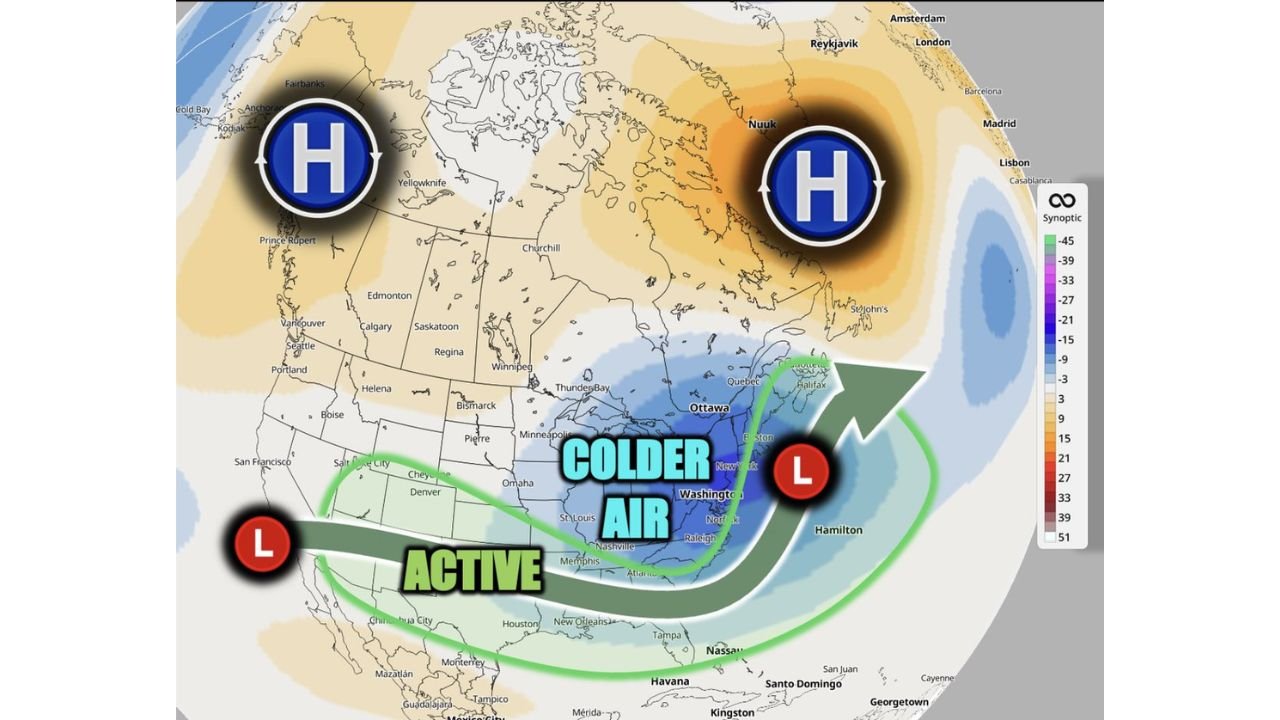
MINNEAPOLIS, Minnesota — Everything that defined April’s weather pattern is about to flip on its head when May arrives. The region that spent April drowning in storms — the Midwest and Great Lakes — is about to get shoved into a late-season frost and freeze threat. Meanwhile, the South and Southeast, which spent all of April bone dry and storm-free, are about to enter an active rain pattern that could finally chip away at a deepening drought.
Two high-pressure systems parked over Alaska and Greenland are the architects of this reversal, and between them they are reshaping the entire country’s weather for the first week of May.
The Cold Air Machine Running May 1 Through 7
High pressure over Greenland and Alaska simultaneously — meteorologists call this an Omega Block pattern — acts like a vice grip on the jet stream, forcing it to buckle dramatically southward through the center of the country. The result is a sustained cold air dump into the Corn Belt, Great Lakes, and Mid-Atlantic at exactly the moment when farmers have crops in the ground and orchards in full bloom.
The blue cold air mass on the map covers a wide swath:
- Minnesota: Minneapolis, Dulles — cold air origin zone; temperatures well below normal through the week
- Wisconsin and Michigan: Both states under the cold dome
- Iowa and Illinois: The heart of the Corn Belt sitting directly under the coldest air
- Missouri and Indiana: St. Louis, Indianapolis — cold air extends this far south
- Ohio and Pennsylvania: Cleveland, Pittsburgh — below-normal temperatures persisting
- Washington D.C. and the Mid-Atlantic: Raleigh, Norfolk — the cold air reaches surprisingly far south and east along the coast
This is not a brief cold snap. The blocking pattern is expected to hold through May 7, meaning the Corn Belt gets roughly a week of consistently below-normal temperatures with multiple frost and freeze events during the most vulnerable period of the planting calendar.
What This Means for Planting Season
Iowa, Illinois, Indiana, and Ohio farmers who planted corn and soybeans in the warm stretch of mid-April are now watching the same soil they put seed into get hit with late-season freezing temperatures. The critical threshold is 28°F sustained for more than four hours — at that point, emerged seedlings in most crops suffer significant cell damage.
Even temperatures in the low-to-mid 30s without hard freezing can stress recently emerged corn by slowing soil respiration and nutrient uptake. Fruit orchards across Michigan and Ohio that have already bloomed face the threat of blossom kill — a single freeze night at the wrong moment can wipe out an entire season’s fruit set.
The timing is particularly cruel because the April active pattern that brought so much rain and severe weather to the Midwest likely pushed some farmers to plant earlier than normal. Early planting means earlier emergence — and earlier emergence means the plants are further along and more exposed when the cold air arrives.
The Southern Flip — Active Pattern From Houston to Atlanta
While the Corn Belt shivers, two low-pressure systems are setting up shop across the Southern U.S. — one over the Southwest and one off the Mid-Atlantic coast. Between them they are pulling a stream of Gulf moisture northward into the drought-stricken South and Southeast.
The green arrow on the map tracing the active storm track runs from Houston and New Orleans north through Memphis and Nashville toward St. Louis — exactly the corridor that has been the focus of severe weather all week. But by May 1 through 7, the character of this activity shifts from pure severe weather toward a more widespread rain-producing pattern as the cold air to the north stabilizes the atmosphere somewhat.
For Atlanta, Nashville, Memphis, and the broader Southeast that has been locked in drought since mid-March, this is the most promising signal for meaningful rainfall since the dry pattern began. The active track does not guarantee drought-busting totals — the deficits in North Carolina, South Carolina, and Georgia are so large that a single week of rain barely registers — but it is the first sustained opportunity for above-normal precipitation across this region all spring.
Two Completely Different Mays Depending on Which Side of the Line You Live
The dividing line between the cold north and the active south runs roughly through St. Louis, Nashville, and Raleigh. North of that line — Minneapolis, Chicago, Detroit, Cleveland, Pittsburgh — May opens cold, quiet, and frost-threatened. South of that line — Memphis, Atlanta, New Orleans, Houston — May opens warm, humid, and increasingly stormy.
Washington D.C. and the Mid-Atlantic get the worst of both worlds — cold air pushing down from the north while storm systems tracking up the coast bring rain and wind. The low-pressure system shown off the Mid-Atlantic coast could bring a multi-day soaking to the drought-stricken Virginia-Maryland-D.C. corridor, which desperately needs it.
The Planting Season Implication Nobody Is Talking About Yet
The combination of an unusually wet and stormy April followed immediately by a cold first week of May creates a compounding problem for Midwest agriculture. Saturated fields from April’s excessive rainfall cannot be worked. A cold early May means the soil temperature drops just as it was finally warming enough for optimal germination. And the frost risk means that anything already in the ground and emerged faces direct crop damage.
This pattern is essentially the opposite of what the Corn Belt needs at this stage of the growing season. Iowa and Illinois needed a warm, dry April for fieldwork and a warm May for planting progress. They got a wet, severe April instead — and now they are getting a cold May to follow it.
The One Variable That Changes Everything
The Omega Block pattern holding the Greenland and Alaska high-pressure systems in place is the key variable. Omega Blocks can be stubborn — sometimes lasting two weeks or more. If this block persists beyond May 7, the cold air and drought-relief rain pattern could extend deeper into May than currently forecast, potentially prolonging both the frost threat in the north and the beneficial rain window in the south. Watch the 10 to 14 day outlooks closely through the first week of May.
Residents from Minneapolis through the Corn Belt should be planning for frost protection now — and residents across the drought-stricken South should watch rainfall forecasts carefully as the most meaningful precipitation window of the entire spring opens up.
WaldronNews.com will continue tracking the early May pattern split and provide daily updates on frost risk for the Corn Belt and rainfall totals across the drought-affected South.